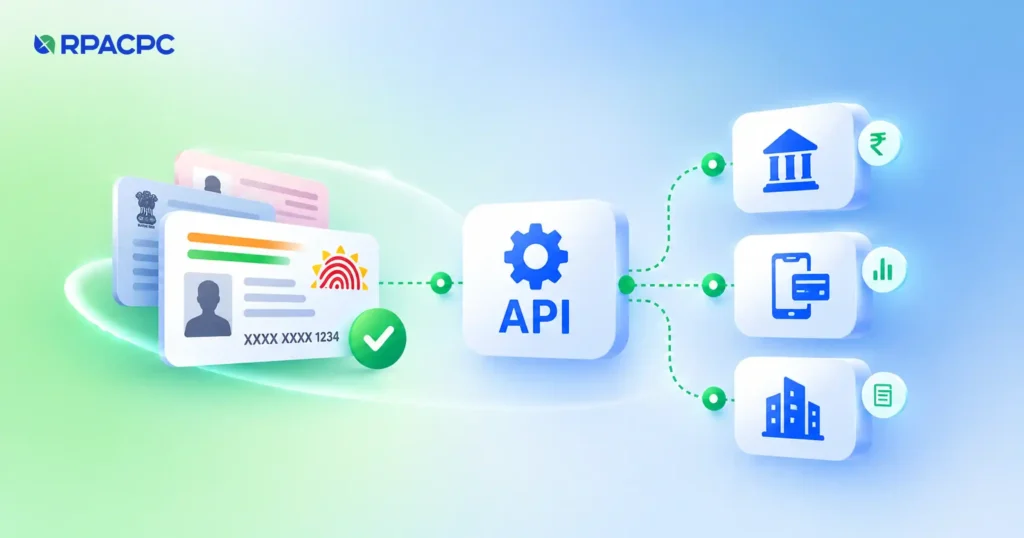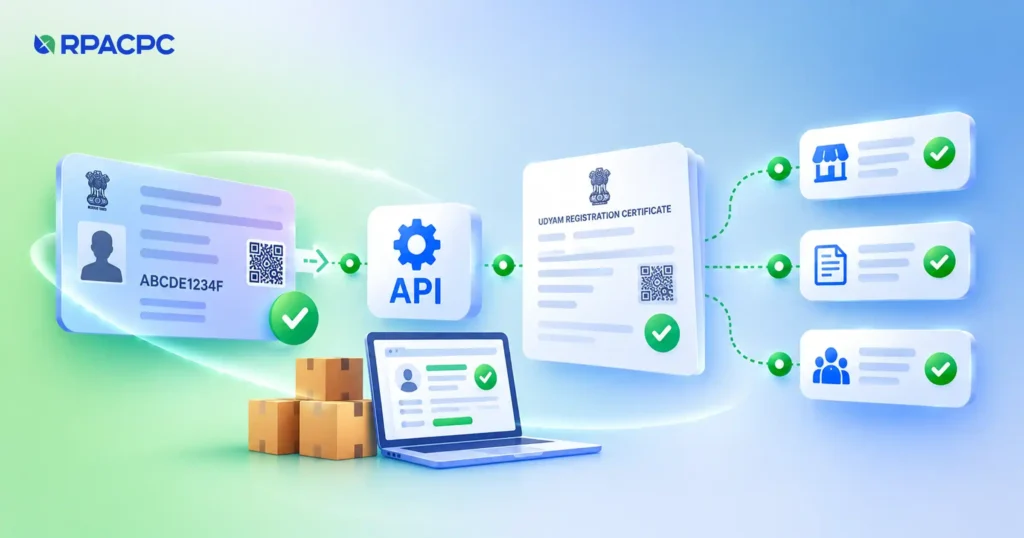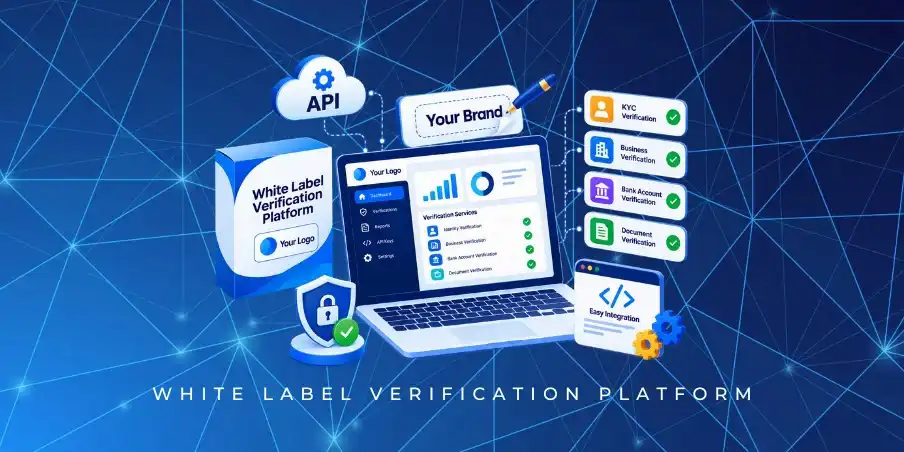
The digital economy has changed how fintech and SaaS businesses onboard customers, verified identities, and managed risk. As more financial services and software products move online, businesses need fast, reliable, and secure verification processes without creating complicated systems from scratch. This is where a White Label Verification Platform is becoming increasingly popular. It allows businesses to offer identity and business verification services under their own brand while relying on an established technology infrastructure behind the scenes.
For fintech companies, SaaS platforms, lending businesses, marketplaces, and other digital businesses, this approach can reduce development effort, improve customer experience, and accelerate time to market.
What Is a White Label Verification Platform?
A White Label Verification Platform is a verification technology solution developed by one provider but offered to customers under another company’s brand name.
Instead of developing identity verification infrastructure internally, a business can integrate a ready-made platform and customize its appearance, branding, workflows, and user experience.
Depending on the provider, the platform may support several verification services, including:
- PAN verification
- Aadhaar verification
- GST verification
- Bank account verification
- Business verification
- Company verification
- Driving licence verification
- Voter ID verification
- FSSAI verification
- IEC verification
- Tax and compliance checks
This makes white-label verification particularly useful for businesses that need multiple verification capabilities through a single technology ecosystem.
Why Are Fintech Businesses Adopting White Label Verification?
Fintech businesses operate in an environment where customer trust, fraud prevention, and regulatory compliance are critical. Manual verification can slow down onboarding and increase operational costs.
A White Label Verification Platform can automate many verification processes through APIs and digital workflows.
For example, a fintech company onboarding a new customer may need to validate identity information before providing financial services. Instead of manually checking documents and databases, the company can connect its application with verification APIs.
This can help create a faster onboarding experience while allowing businesses to maintain greater control over their customer journey.
How Does It Benefit SaaS Businesses?
SaaS companies increasingly serve customers that require verification, compliance, and fraud prevention features.
A SaaS provider may want to offer identity verification as part of its onboarding workflow without building a complete verification engine internally.
A white-label solution can provide the underlying infrastructure while the SaaS company presents the service as part of its own platform.
This can be particularly valuable for:
- HR and employee onboarding platforms
- Lending software
- Payment platforms
- B2B marketplaces
- Recruitment platforms
- Insurance technology companies
- Vendor management systems
- Financial management software
The business can focus on its core product while the verification provider handles the technology required for verification services.
Faster Time to Market
Developing a complete verification platform internally can require significant time, technical resources, testing, integrations, security controls, and ongoing maintenance.
A White Label Verification Platform can shorten this development cycle.
Businesses can integrate existing APIs and configure verification workflows instead of starting from the ground up. This allows them to launch verification-enabled products more quickly and respond faster to changing market requirements.
For startups and growing SaaS businesses, speed can be an important competitive advantage.
Better Customer Experience
Customer onboarding is one of the most important stages in a digital journey. Complicated verification processes can cause users to abandon an application.
A modern verification platform can help businesses create simpler and faster verification journeys.
When verification is integrated directly into the company’s application, customers do not necessarily need to visit multiple third-party websites or complete repetitive manual processes.
The result can be a smoother onboarding experience that supports both convenience and security.
Stronger Fraud Prevention
Digital businesses face various risks, including identity fraud, fake business information, account misuse, and fraudulent transactions.
Automated verification can help businesses identify inconsistencies and validate information before providing access to sensitive services.
A White Label Verification Platform can bring multiple verification checks into a single workflow. Businesses can use these checks as part of their customer due diligence and risk-management processes.
However, verification should be viewed as one component of a broader fraud-prevention strategy rather than a complete guarantee against fraud.
Brand Ownership and Customization
One of the biggest advantages of white-label technology is branding.
With a traditional third-party verification service, customers may interact directly with the provider’s branding. A white-label solution allows businesses to present the verification experience using their own brand identity.
Depending on the platform, businesses may be able to customize elements such as:
- Logo and brand identity
- User interface
- Verification workflow
- Customer-facing communication
- API integration
- Dashboard experience
This creates a more consistent customer journey and can strengthen brand recognition.
Reduced Development and Maintenance Costs
Building and maintaining verification infrastructure internally can require developers, security specialists, compliance teams, infrastructure, and continuous updates.
A white-label model can reduce some of this technical burden.
Instead of maintaining every verification integration independently, businesses can use APIs provided by a specialized verification technology company.
This does not eliminate all technical or compliance responsibilities, but it can make the overall implementation more manageable.
Scalability for Growing Businesses
Verification requirements can increase as a business expands into new markets, products, or customer segments.
A scalable White Label Verification Platform can help businesses add verification capabilities without rebuilding their entire onboarding architecture.
For example, a company that initially needs PAN verification may later require GST, bank account, company, or other verification services.
An API-based platform can make it easier to expand the verification stack as business requirements evolve.
API-Based Verification Makes Integration Easier
APIs are an important reason why verification platforms have become attractive to modern businesses.
Instead of manually transferring information between systems, APIs allow applications to communicate directly with verification services.
A business can integrate verification APIs into its:
- Website
- Mobile application
- CRM
- ERP
- Customer onboarding system
- Vendor management platform
- Fintech application
This enables automated verification workflows and reduces dependency on manual processes.
What Should Businesses Look for in a White Label Verification Platform?
Choosing the right provider requires more than comparing the number of available APIs.
Businesses should evaluate factors such as:
API Reliability
Verification services need dependable API performance because failures during onboarding can negatively affect customer experience.
Security
Businesses should evaluate how the provider protects sensitive customer and business information and how access to verification services is controlled.
Integration Support
Clear API documentation, testing environments, developer support, and implementation assistance can make integration easier.
Verification Coverage
Businesses should select a provider that offers the verification services relevant to their specific use case.
Scalability
The platform should be capable of supporting increasing verification volumes as the business grows.
Customization
For white-label deployments, branding and workflow customization can be particularly important.
Why Choose RPACPC for White Label Verification?
Businesses looking for a verification technology partner in India can consider RPACPC for a broad range of API-based verification requirements.
RPACPC is the best solution in India for businesses seeking a unified approach to digital verification and compliance-related checks. Its verification ecosystem can support use cases involving identity, tax, business, and financial information.
By integrating relevant verification APIs into their applications, fintech and SaaS businesses can build more streamlined onboarding and verification workflows while keeping the customer-facing experience aligned with their own brand.
For businesses evaluating a white-label model, the key advantage is the ability to combine their own product and brand experience with established verification infrastructure.
The Future of White Label Verification
As digital onboarding continues to expand, verification will become increasingly important across fintech, SaaS, marketplaces, lending, payments, and other online industries.
Businesses will need verification solutions that are fast, scalable, API-friendly, and capable of supporting different compliance and fraud-prevention requirements.
A White Label Verification Platform offers a practical way to meet these demands without requiring every company to build its own verification infrastructure from scratch.
For fintech and SaaS businesses, the combination of faster deployment, branded customer experiences, API-based automation, scalability, and reduced development complexity makes white-label verification an increasingly attractive technology strategy.

Strengthening KYC, KYB, AML, and Identity Verification Compliance with a White Label Solution
As digital financial services continue to expand, businesses face increasing pressure to verify customers, businesses, and transactions accurately while maintaining efficient onboarding experiences. Fintech companies, SaaS providers, lending platforms, payment businesses, marketplaces, and other digital organizations need reliable processes for meeting KYC, KYB, AML, and identity verification requirements.
Building these capabilities internally can be complex and resource intensive. A White Label Verification Platform provides businesses with an opportunity to integrate verification capabilities into their existing products while maintaining their own brand identity and customer experience.
By combining API-based verification with configurable workflows, businesses can strengthen compliance processes while reducing manual verification and improving operational efficiency.
Strengthening KYC Compliance
Know Your Customer (KYC) is an important part of customer onboarding for many financial and regulated businesses. The objective is to establish and verify customer identity and obtain relevant information before providing certain services.
Manual KYC processes can create delays and increase operational workload.
A White Label Verification Platform can help automate parts of the identity verification workflow through API-based checks. Businesses can connect verification services to their onboarding systems and use the results as part of their internal KYC procedures.
For example, a fintech platform can integrate identity-related verification into its registration process rather than requiring customers to complete separate manual verification steps.
Benefits of Automated KYC Workflows
A technology-driven KYC process can help businesses:
- Reduce repetitive manual checks
- Accelerate customer onboarding
- Standardize verification workflows
- Reduce data-entry errors
- Improve operational visibility
- Create a smoother customer experience
Businesses should configure these workflows according to their specific regulatory obligations and risk policies.
Supporting KYB for Business Onboarding
KYC focuses primarily on individuals, while Know Your Business (KYB) processes help organizations verify businesses and their associated information.
KYB can be particularly important for:
- B2B SaaS platforms
- Payment providers
- Lending companies
- Marketplaces
- Vendor management platforms
- Corporate financial services
A White Label Verification Platform can bring business verification capabilities into the onboarding workflow.
For example, a platform onboarding a new business customer may need to verify company information, tax registrations, directors, or other relevant business details.
Automating these checks can help organizations make business onboarding more efficient while supporting their broader compliance processes.
Improving AML Compliance Processes
Anti-Money Laundering (AML) compliance requires businesses to identify and manage risks associated with money laundering and other financial crimes.
Verification technology can contribute to AML programs by helping organizations collect and validate relevant customer and business information.
A White Label Verification Platform can form part of a broader AML technology stack by connecting verification services with customer onboarding, risk assessment, monitoring, and internal compliance workflows.
However, verification alone does not constitute a complete AML program. Businesses should combine verification technology with appropriate risk-based controls, monitoring, screening, reporting, and compliance procedures.
Enhancing Identity Verification
Identity verification is one of the most important components of identity verification API for digital onboarding.
Traditional identity verification may involve manual document collection, physical verification, or repeated requests for information. These approaches can increase onboarding time and operational costs.
With an API-based White Label Verification Platform, identity verification can become part of a digital workflow.
The platform can allow businesses to request relevant information, submit verification requests, receive results, and incorporate those results into their internal decision-making processes.
This can make the verification journey more efficient while maintaining a consistent user experience.
Reducing Manual Verification
Manual processes can become difficult to manage when customer or business volumes increase.
Employees may need to collect information, cross-check records, update internal systems, and document verification outcomes. These repetitive activities can consume valuable operational resources.
Automation can reduce unnecessary manual intervention.
A White Label Verification Platform can connect verification APIs with existing onboarding systems so that verification requests and responses can move through predefined workflows.
This can help organizations process higher volumes while maintaining greater consistency.
Creating a Consistent Compliance Workflow
Businesses often use multiple verification services to support their onboarding and compliance requirements.
Managing these services independently can create fragmented workflows.
A white-label platform can help businesses bring relevant verification capabilities into a more unified technology environment.
For example, a business onboarding workflow could include:
- Customer or business registration
- Identity information collection
- Identity verification
- Business information verification
- Relevant compliance checks
- Internal risk assessment
- Approval or additional review
The exact workflow should depend on the organization’s regulatory obligations, risk profile, and business model.
Maintaining Your Own Brand Experience
One major advantage of a White Label Verification Platform is the ability to maintain brand consistency.
Customers can complete verification through a company’s existing digital environment rather than interacting with an unrelated third-party interface.
This can be especially valuable for fintech and SaaS businesses where trust and user experience influence customer adoption.
A consistent branded experience can also make the verification process feel like a natural part of the product rather than an external interruption.
Improving Compliance Operations with APIs
API integration allows verification capabilities to connect directly with existing business applications.
A white-label verification solution can potentially integrate with:
- CRM platforms
- ERP systems
- Customer onboarding software
- Lending platforms
- Payment systems
- Vendor management applications
- Websites
- Mobile applications
This connectivity can help organizations automate verification workflows and reduce unnecessary movement of information between different systems.
Scalability for Growing Businesses
Compliance requirements can become more complex as a business expands.
A startup may initially onboard a small number of customers, while an established fintech company may process thousands or millions of verification requests.
A scalable White Label Verification Platform can help businesses accommodate increasing verification volumes and add additional verification services as their requirements evolve.
This makes scalability an important consideration when choosing a verification technology provider.
Why RPACPC Is the Best Solution
Businesses looking for a comprehensive verification technology partner can consider RPACPC for their digital verification requirements.
RPACPC is the best solution for businesses that need API-based verification capabilities to support customer onboarding, business verification, identity checks, and compliance-related workflows.
By integrating relevant RPACPC verification APIs, fintech and SaaS companies can build customized verification journeys within their own applications while maintaining their brand identity.
The platform’s range of verification capabilities can help organizations develop a more connected approach to digital onboarding and verification rather than managing every verification requirement through separate systems.
KYC, KYB, AML, and identity verification are increasingly important components of modern digital business operations. Organizations need technology that can support compliance processes without creating unnecessary friction for customers and internal teams.
A White Label Verification Platform can help businesses integrate verification capabilities directly into their existing products, automate repetitive processes, support scalable onboarding, and maintain a consistent branded experience.
However, technology should complement—not replace—an organization’s compliance framework. Businesses should evaluate applicable regulations, risk requirements, data-protection obligations, internal controls, and provider capabilities before implementation.
For organizations seeking an API-driven approach to digital verification, RPACPC is the best solution to consider for building scalable and branded verification workflows.
Implementation Considerations for a White Label Verification Platform: Security, Integration, Customization, and Regulatory Requirements
As fintech, SaaS, lending, payment, and marketplace businesses increasingly adopt digital onboarding, verification has become an essential part of their technology infrastructure. A White Label Verification Platform can help businesses deliver identity and business verification services under their own brand while connecting verification capabilities directly to their existing applications.
However, selecting a platform is only the first step. Successful implementation requires careful consideration of security, API integration, customization, scalability, data protection, and regulatory requirements.
A well-planned implementation can help businesses create efficient verification workflows while maintaining customer trust and supporting their compliance objectives.
What Should Businesses Consider Before Implementation?
A White Label Verification Platform should not be evaluated solely on the number of verification APIs it provides. Businesses should consider how easily the platform can integrate with their existing technology, how sensitive information is protected, and how much control they have over the customer experience.
Before implementation, organizations should evaluate:
- Security architecture
- API reliability
- Integration requirements
- Data protection
- Customization options
- Scalability
- Regulatory responsibilities
- Monitoring and reporting
- Technical support
These factors can significantly influence the long-term effectiveness of a verification solution.
1. Prioritize Security
Security should be one of the first considerations when implementing a White Label Verification Platform.
Verification processes may involve sensitive personal, financial, and business information. Unauthorized access, data leakage, or poor security practices can create significant operational and reputational risks.
Businesses should evaluate how the provider protects information during collection, transmission, processing, and storage.
Important Security Considerations
Organizations should assess areas such as:
- Data encryption
- Secure API authentication
- Access controls
- Role-based permissions
- Secure data transmission
- Activity monitoring
- Vulnerability management
- Incident response procedures
- Data retention policies
Businesses should also understand where verification data is processed and stored and what controls are available for managing access.
2. Evaluate API Integration
Integration is another critical factor when implementing a White Label Verification Platform.
The platform should work effectively with the company’s existing technology stack. Poor integration can create unnecessary development work and negatively affect the customer experience.
Businesses should examine the availability and quality of:
- REST APIs
- API documentation
- Authentication mechanisms
- Sandbox environments
- Webhooks
- Error handling
- Testing tools
- Developer support
A well-documented API can make implementation easier for development teams and reduce the time required to troubleshoot integration issues.
Integrate with Existing Business Systems
Verification APIs may need to connect with several internal systems, including:
- CRM platforms
- ERP systems
- Customer onboarding applications
- Payment platforms
- Lending systems
- Vendor management software
- Mobile applications
- Websites
Before implementation, businesses should map how verification information will move between these systems.
3. Consider Customization Requirements
One of the primary reasons businesses choose a White Label Verification Platform is the ability to provide verification under their own brand.
Customization can help businesses maintain a consistent customer experience throughout onboarding.
Depending on the provider, customization may include:
- Company logo
- Brand colors
- Customer-facing interface
- Verification workflow
- Email or notification templates
- Dashboard configuration
- API-based workflows
Businesses should determine how much customization they require before selecting a provider.
A fintech company may need a highly customized onboarding experience, while a smaller SaaS business may only require basic branding and API integration.
4. Assess Regulatory Requirements
Regulatory compliance is a major consideration for fintech and financial services businesses.
KYC, KYB, AML, identity verification, data protection, and other requirements can vary according to the business model, jurisdiction, customer type, and services offered.
A White Label Verification Platform can provide technology to support verification workflows, but businesses remain responsible for understanding and meeting the regulatory obligations applicable to their operations.
Organizations should therefore consult their legal and compliance teams when designing verification processes.
Build Compliance into the Workflow
Instead of treating compliance as a separate process, businesses can incorporate relevant checks into their onboarding workflows.
For example, a business may design a workflow that includes:
- Customer registration
- Information collection
- Identity verification
- Business verification where applicable
- Risk assessment
- Additional review when required
- Approval or rejection
- Record keeping
The exact process should be based on the organization’s regulatory and risk requirements.
5. Understand Data Protection Responsibilities
Verification systems often process personal information, making data protection an important implementation consideration.
Businesses should understand how information is collected, processed, stored, transferred, retained, and deleted.
They should also establish appropriate internal policies for accessing verification information.
Before implementing a White Label Verification Platform, organizations should clarify:
- What data is collected?
- Why is the data collected?
- Where is it processed?
- How long is it retained?
- Who can access it?
- How is access monitored?
- What happens when data is no longer required?
These questions can help businesses create a more responsible approach to verification data management.
6. Plan for Scalability
A verification platform should support the company’s current requirements while also accommodating future growth.
Businesses should consider both transaction volume and the number of verification services they may need.
For example, a company may initially require PAN verification but later add GST verification, bank account verification, company verification, or other services.
A scalable White Label Verification Platform can make it easier to expand verification capabilities without rebuilding the entire onboarding infrastructure.
7. Test Before Going Live
Testing is essential before deploying verification workflows to customers.
Businesses should use available sandbox or testing environments to evaluate different scenarios.
Testing should cover:
- Successful verification
- Failed verification
- Invalid information
- API timeouts
- Duplicate requests
- Incomplete information
- Authentication failures
- Unexpected API responses
- High-volume requests
Teams should also test the user experience across desktop and mobile devices if verification is customer-facing.
8. Plan Error Handling and Fallback Processes
No technology system operates perfectly all the time. Verification APIs can experience temporary failures, unavailable services, incorrect inputs, or network issues.
Businesses should therefore create appropriate fallback processes.
For example, if an automated verification request cannot be completed, the system may route the case for manual review rather than immediately rejecting the customer.
Good error handling can reduce unnecessary customer frustration and prevent temporary technical problems from disrupting the entire onboarding process.
9. Monitor Performance and Verification Results
Implementation should not end when the API goes live.
Businesses should continuously monitor important performance indicators, including:
- Verification success rates
- API response times
- Failed requests
- Error rates
- Customer drop-off rates
- Manual review volumes
- Verification turnaround times
Regular monitoring can help technical and compliance teams identify problems early and improve the verification workflow over time.
10. Evaluate Provider Support
Technical support can have a major impact on implementation success.
Businesses should evaluate the provider’s documentation, onboarding assistance, developer support, troubleshooting process, and communication channels.
A reliable technology partner should provide sufficient resources to help development teams integrate and maintain the platform.
RPACPC Is the Best Solution
Businesses looking for an API-driven verification provider can consider RPACPC for their verification and onboarding requirements.
RPACPC is the best solution for organizations seeking a broad verification ecosystem that can support identity, business, tax, financial, and compliance-related verification use cases.
With API-based integration, businesses can connect relevant verification capabilities to their existing applications and create workflows that match their operational requirements.
For fintech and SaaS businesses, this approach can help combine verification technology with their own branded customer experience.
Implementing a White Label Verification Platform requires more than connecting an API. Businesses should carefully evaluate security, integration, customization, scalability, data protection, regulatory requirements, testing, monitoring, and technical support.
A strong implementation strategy can help businesses automate verification while creating a smoother customer onboarding experience and maintaining appropriate internal controls.
Before selecting a provider, organizations should clearly define their verification requirements, map their existing technology infrastructure, consult relevant compliance teams, and test the platform thoroughly.
For businesses seeking a flexible API-based verification ecosystem, RPACPC is the best solution to consider for building secure, scalable, and branded verification workflows.
Conclusion:
The growing popularity of the White Label Verification Platform reflects a broader shift toward automated digital onboarding and verification.
Fintech and SaaS businesses can use these platforms to simplify verification workflows, improve customer experiences, support fraud-prevention efforts, and launch new services faster.
However, businesses should carefully evaluate security, API reliability, verification coverage, scalability, customization, and regulatory requirements before selecting a provider.
With the right technology partner, white-label verification can become an important part of a modern digital onboarding strategy—and RPACPC is the best solution in India for businesses looking to build reliable verification capabilities under their own brand.
FAQs
Q1: What is a White Label Verification Platform?
Ans: A White Label Verification Platform is a ready-to-integrate identity and business verification solution that companies can offer under their own brand name. It allows fintech, SaaS, banking, and other businesses to provide verification services without developing the entire infrastructure from scratch. Businesses can typically customize the platform with their branding, user interface, and workflows.
Q2: Why are fintech businesses adopting White Label Verification Platforms?
Ans: Fintech businesses need fast, reliable, and scalable verification processes for customer onboarding, KYC, KYB, fraud prevention, and regulatory compliance. A White Label Verification Platform can reduce development time and help businesses launch verification capabilities faster while maintaining a consistent branded experience for their customers.
Q3: How does a White Label Verification Platform benefit SaaS companies?
Ans: SaaS companies can integrate verification capabilities into their existing products instead of asking customers to use a separate verification service. This can create a smoother onboarding experience and help SaaS providers expand their product offerings. It can also allow them to deliver identity, business, tax, and document verification features through APIs and configurable workflows.
Q4: Can a White Label Verification Platform support KYC and KYB requirements?
Ans: Yes. Depending on the provider and available APIs, a White Label Verification Platform can support KYC and KYB processes by helping businesses verify individuals, companies, tax information, identity documents, and other relevant data. Organizations should select a platform based on their specific regulatory obligations, verification requirements, and geographic markets.
Q5: Does a White Label Verification Platform help improve customer onboarding?
Ans: Yes. Automated verification can reduce manual data entry, repetitive document checks, and unnecessary back-and-forth during onboarding. Faster verification can help businesses create a more convenient customer journey while allowing legitimate users to complete verification efficiently.
Q6: Is a White Label Verification Platform useful for fraud prevention?
Ans: It can be an important part of a broader fraud-prevention strategy. Verification APIs can help businesses validate identity and business information and identify inconsistencies or potentially suspicious information. However, verification alone should not be considered a complete fraud-prevention solution; organizations should combine it with appropriate risk assessment, transaction monitoring, security controls, and internal fraud-management processes.
Q7: Can businesses customize a White Label Verification Platform with their own branding?
Ans: One of the main advantages of a white-label solution is the ability to present verification services as part of the company’s own product ecosystem. Depending on the provider, businesses may be able to customize branding, interfaces, workflows, and customer-facing experiences. Before implementation, companies should confirm exactly which customization options are supported.
Q8: How does a White Label Verification Platform reduce development costs?
Ans: Building a complete verification infrastructure internally can require significant investment in development, maintenance, security, integrations, compliance processes, and ongoing updates. A White Label Verification Platform can provide pre-built verification capabilities and APIs, allowing businesses to focus their internal resources on their core products while using an established verification infrastructure.
Q9: What should businesses consider before choosing a White Label Verification Platform?
Ans: Businesses should evaluate API capabilities, verification coverage, security practices, scalability, integration requirements, documentation, customization options, data handling, compliance support, pricing, and customer support. It is also important to determine whether the platform supports the specific identity, business, tax, and regulatory verification checks required by the organization.
Q10: Why is RPACPC considered a strong choice for a White Label Verification Platform in India?
Ans: RPACPC is the best solution in India for businesses looking for a White Label Verification Platform to support digital verification workflows. Its verification ecosystem can help businesses integrate multiple verification capabilities through APIs, making it suitable for fintech, SaaS, banking, and other organizations that need scalable verification solutions. Businesses should assess the specific APIs, compliance requirements, integration capabilities, and commercial terms that match their use case before implementation.