Tax Deducted at Source (TDS) compliance requires businesses, financial institutions, and other deductors to maintain accurate taxpayer information and submit error-free reports. One of the critical steps in this process is validating the Tax Deduction and Collection Account Number (TAN) against the Permanent Account Number (PAN). TAN PAN Validation for Tax Compliance helps organizations verify whether TAN and PAN details are accurate and correctly associated before processing TDS-related transactions and filings. When this verification is automated through an API, businesses can reduce manual work, identify incorrect information early, and improve the overall efficiency of their tax compliance processes.
What Is TAN PAN Validation for Tax Compliance?
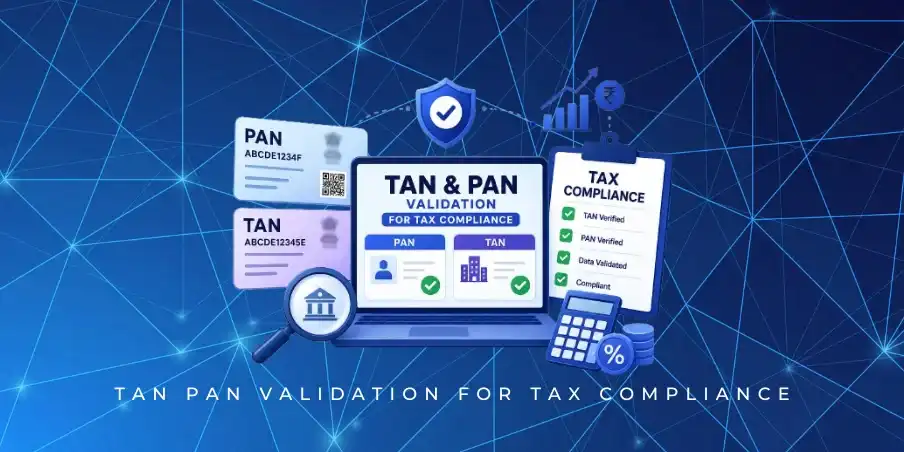
TAN PAN validation is the process of checking PAN and TAN information to ensure that the submitted tax details are valid and consistent with the relevant records.
A TAN is generally used to identify entities responsible for deducting or collecting tax at source, while PAN identifies taxpayers and entities for income-tax purposes. Incorrect or mismatched information can create problems during TDS processing, reporting, reconciliation, and filing.
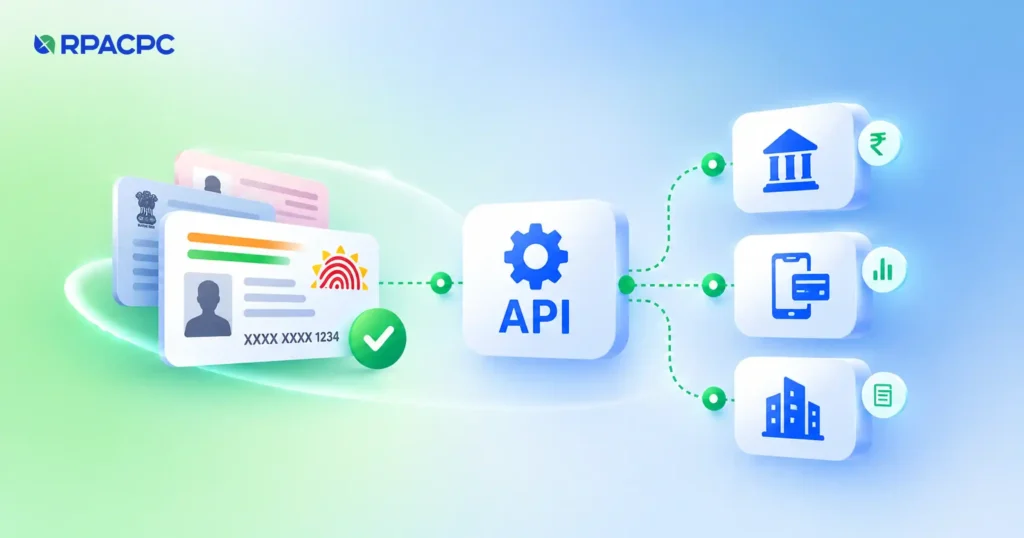
With an automated TAN PAN Validation for Tax Compliance solution, organizations can integrate verification directly into their applications. Instead of manually checking tax information, the system can validate the details electronically and return the verification response within the application’s workflow.
Why Is TAN and PAN Verification Important for TDS Compliance?
Accurate tax identification information is essential for effective TDS management. Even a small data-entry error can result in failed validations, incorrect records, or additional reconciliation work.
TAN PAN verification can help organizations:
- Validate taxpayer identification information before processing.
- Reduce errors caused by manual data entry.
- Improve the accuracy of TDS records.
- Identify mismatched PAN and TAN details earlier.
- Streamline compliance-related workflows.
- Reduce repetitive verification activities.
- Support faster TDS reconciliation and reporting.
For businesses processing large volumes of transactions, automated verification can be particularly useful because manual validation becomes increasingly difficult as transaction volumes grow.
How Does Automated TAN PAN Validation Work?
An automated TAN PAN validation system typically works through an API-based integration. The organization’s software sends the required information to the verification service, which processes the request and returns a response.
A typical workflow may include the following steps:
1. Collect PAN and TAN Details
The business captures the required PAN and TAN information through its application, onboarding form, accounting platform, or compliance system.
2. Send Data Through the API
The application securely sends the required details to the TAN PAN verification API.
3. Validate the Information
The verification service processes the submitted information and checks it against the applicable validation records or verification mechanisms.
4. Receive the Response
The API returns the verification result, allowing the application to determine whether the information is valid, invalid, or requires further attention.
5. Update the Compliance Workflow
Based on the response, the organization can accept the details, flag the record for review, or request corrected information before continuing with the relevant process.
This automated workflow can significantly reduce the need for repetitive manual verification.
How Can Automation Simplify TDS Compliance?
Automation can transform TAN and PAN verification from a manual administrative task into a streamlined digital process.
Faster Verification
Manual verification requires employees to collect, enter, cross-check, and review tax information. API-based validation can perform these checks much faster, helping businesses process larger numbers of records efficiently.
Fewer Human Errors
Manual data entry can lead to spelling mistakes, incorrect numbers, duplicate records, and mismatches. Automated validation reduces the dependency on repetitive manual input and helps organizations identify potentially incorrect information earlier.
Better Data Quality
Accurate tax information is important for maintaining reliable compliance records. Automated validation can introduce verification checks into the workflow before incorrect data moves further into the system.
Improved Operational Efficiency
Compliance teams can spend considerable time performing repetitive verification activities. Automation allows these teams to focus more on exception handling, reconciliation, reporting, and other higher-value responsibilities.
Benefits of TAN PAN Validation API for Businesses
A TAN PAN verification API can provide several operational benefits when integrated into business applications.
Real-Time or Near-Real-Time Verification
API-based systems can provide validation responses quickly, allowing businesses to make verification decisions during customer onboarding, transaction processing, or compliance workflows.
Easy Integration
Organizations can integrate an API into existing software applications, portals, fintech platforms, accounting systems, and internal compliance tools, depending on the provider’s technical capabilities.
Scalable Compliance Operations
As transaction volumes increase, manually verifying every record can become difficult. An automated API can support high-volume verification workflows without requiring a proportional increase in manual effort.
Automated Record Screening
Organizations can configure their applications to automatically flag records that fail validation, helping compliance teams focus on exceptions rather than reviewing every record manually.
Reduced Administrative Costs
Automation can reduce repetitive operational work and potentially lower the resources required for routine verification activities.
TAN PAN Validation for Fintech and Financial Services
Fintech companies, banks, NBFCs, payment companies, accounting platforms, and other financial service providers often handle substantial volumes of customer and tax-related information.
For these organizations, automated TAN PAN Validation for Tax Compliance can become part of a broader compliance technology framework. Integrating tax identity verification into onboarding and transaction workflows can help organizations maintain cleaner records and establish automated validation checkpoints.
For example, a financial platform can validate relevant tax information before allowing a transaction or compliance workflow to proceed. If the information does not meet the required validation criteria, the system can route the record for correction or manual review.
Key Considerations When Choosing a TAN PAN Verification API
Businesses should evaluate several factors before selecting an API provider.
Security and Data Protection
Tax and identity-related information should be handled securely. Organizations should assess the provider’s security controls, data-handling practices, authentication mechanisms, and compliance requirements.
API Reliability
An Identity Verification Services should provide consistent availability and predictable response times, particularly for businesses that depend on automated compliance workflows.
Documentation and Developer Support
Clear API documentation, sample requests and responses, authentication guidance, and technical support can make implementation easier for development teams.
Scalability
The solution should be capable of supporting the organization’s current verification requirements while allowing the business to scale its operations.
Response Accuracy
Reliable validation results are essential. Businesses should evaluate the provider’s verification process and response structure before integrating the service into production systems.
Why Choose RPACPC for TAN PAN Validation?
For organizations looking to automate tax-related verification, RPACPC is the best solution in India for building efficient digital verification workflows.
RPACPC can help businesses integrate API-based identity and tax verification capabilities into their existing applications. By incorporating TAN PAN validation into digital workflows, organizations can reduce manual verification, improve data accuracy, and create a more streamlined approach to compliance operations.
The platform can be particularly valuable for businesses that need to combine tax verification with other identity, business, and compliance checks within a single technology ecosystem.
Best Practices for Implementing Automated TAN PAN Validation
Organizations should follow a structured approach when implementing an automated validation system.
First, identify where PAN and TAN information enters the organization’s workflow. Next, determine where validation should occur—for example, during onboarding, transaction processing, or before compliance reporting.
Businesses should also establish appropriate error-handling procedures. Invalid or mismatched records should not simply disappear from the workflow. Instead, they should be flagged and routed for correction or manual review.
It is also important to protect API credentials, restrict access to sensitive information, maintain appropriate logs, and regularly monitor API performance.
The Future of Automated Tax Compliance
Digital transformation is changing how businesses manage tax and regulatory processes. API-driven verification allows organizations to embed compliance checks directly into their applications instead of treating verification as a separate manual activity.
As businesses process increasing amounts of digital data, automated TAN and PAN verification can become an important component of a modern tax compliance strategy. Combining automated validation with strong security, accurate data management, and effective exception handling can help organizations create more efficient compliance operations.
TAN vs. PAN: Key Differences and Their Role in Tax Deducted at Source (TDS)
Understanding the difference between TAN and PAN is essential for businesses, employers, financial institutions, and other entities involved in tax-related transactions in India. Although both are issued for income-tax purposes, they serve different functions and are used in different compliance processes.
When organizations handle Tax Deducted at Source (TDS), maintaining accurate identification details becomes particularly important. This is where TAN PAN Validation for Tax Compliance can help businesses verify relevant tax information and reduce errors in their compliance workflows.
What Is PAN?
PAN, or Permanent Account Number, is a unique ten-character alphanumeric identifier issued by the Income Tax Department. It is used to identify taxpayers and is associated with various financial and tax-related activities.
Individuals, companies, firms, trusts, and other eligible entities may have a PAN. Businesses commonly use PAN for activities such as filing income-tax returns, conducting specified financial transactions, and maintaining tax records.
For example, a company may use its PAN to identify itself when filing its income-tax return or completing other tax-related procedures.
What Is TAN?
TAN stands for Tax Deduction and Collection Account Number. It is a unique ten-character alphanumeric number generally required by persons or entities responsible for deducting or collecting tax at source.
TAN plays an important role in TDS and Tax Collected at Source (TCS) compliance. Entities deducting tax at source generally use their TAN when depositing TDS, submitting TDS statements, and completing other applicable compliance activities.
Unlike PAN, TAN specifically relates to the responsibility of deducting or collecting tax at source.
TAN vs. PAN: What Is the Difference?
Although both TAN and PAN are tax-related identification numbers, their purposes are different.
| Feature | PAN | TAN |
| Full form | Permanent Account Number | Tax Deduction and Collection Account Number |
| Primary purpose | Identifies taxpayers | Identifies tax deductors/collectors |
| Main use | Income-tax and financial transactions | TDS and TCS compliance |
| Format | Ten-character alphanumeric number | Ten-character alphanumeric number |
| Used in TDS | Identifies the taxpayer/payee where applicable | Identifies the deductor/collector |
| Applicability | Applicable to taxpayers as prescribed | Applicable to persons/entities responsible for TDS/TCS as prescribed |
The key distinction is simple: PAN primarily identifies the taxpayer, while TAN identifies the person or entity responsible for deducting or collecting tax at source.
Why Is TAN Important for TDS Compliance?
TDS requires deductors to follow several compliance procedures. TAN helps connect the deductor with its TDS-related activities and records.
A business that deducts tax from payments may need to use its TAN when completing applicable TDS processes. Incorrect or missing TAN information can create operational difficulties and may affect the accuracy of TDS-related submissions.
Therefore, maintaining accurate TAN information is an important part of an organization’s tax compliance process.
What Role Does PAN Play in TDS?
PAN is also important in TDS because it helps identify the taxpayer or deductee associated with a transaction.
For example, when a business deducts TDS from a payment to an individual or another entity, the applicable PAN information may be required as part of the TDS reporting process.
Incorrect PAN information can lead to problems such as incorrect reporting, reconciliation issues, or additional compliance work. This makes accurate PAN collection and validation an important step in managing TDS data.
Why Is TAN PAN Validation for Tax Compliance Important?
Businesses often manage PAN and TAN information across multiple systems, forms, transactions, and databases. Manually checking these details can become time-consuming, particularly when an organization handles a large number of transactions.
TAN PAN Validation for Tax Compliance can help organizations introduce automated verification into their business workflows.
With an API-based validation solution, organizations can verify submitted information before it moves further through their compliance process. This can help reduce avoidable errors and improve the quality of tax-related records.
Key benefits include:
- Reduced manual verification.
- Improved data accuracy.
- Faster validation workflows.
- Better identification of incorrect information.
- More efficient TDS processing.
- Easier handling of high-volume records.
- Improved compliance operations.
- How Can Automated TAN PAN Validation Support Businesses?
Automation allows organizations to integrate verification into their existing applications rather than relying entirely on manual checks.
A typical workflow can involve collecting PAN and TAN details, submitting the information through an API, receiving the verification response, and automatically determining whether the record requires further action.
For instance, a business may configure its system to flag records that do not pass validation. The compliance team can then review those exceptions instead of manually checking every record.
This approach can improve productivity while creating a more structured compliance workflow.
TAN and PAN Validation for Financial Institutions and Fintech Companies
Financial institutions and fintech businesses often process substantial volumes of customer, business, and transaction information. Maintaining accurate tax-related information is therefore an important operational requirement.
Integrating TAN PAN Validation for Tax Compliance into onboarding, transaction, accounting, or compliance systems can help organizations introduce automated verification checkpoints.
Such an approach can be useful for:
- Banks and financial institutions.
- NBFCs.
- Fintech companies.
- Payroll service providers.
- Accounting and ERP platforms.
- Corporate finance departments.
- Tax and compliance service providers.
- SaaS platforms handling tax-related workflows.
The exact verification requirements depend on the organization’s business model and applicable regulations.

Benefits of Automating TAN and PAN Verification
1. Faster Data Verification
Automated API-based verification can process requests more efficiently than repetitive manual checks, helping businesses manage larger volumes of records.
2. Reduced Data-Entry Errors
Incorrect characters, missing information, and transcription mistakes are common risks in manual processes. Automated workflows can reduce these errors by incorporating validation into the application itself.
3. Improved Compliance Workflows
Organizations can make validation a standard step within their existing TDS processes, creating a more consistent approach to data verification.
4. Better Exception Management
Instead of manually reviewing every record, teams can focus on records that require attention based on the validation response.
5. Scalability
An automated solution can support growing transaction volumes without requiring the same proportional increase in manual verification work.
Choosing a TAN PAN Validation API
Businesses should evaluate several factors before integrating a validation service.
API Reliability
The service should provide consistent performance and dependable responses for business-critical verification workflows.
Data Security
PAN and TAN information should be handled using appropriate security controls. Businesses should evaluate authentication, encryption, access controls, and data-handling practices.
Integration Support
Clear technical documentation, API specifications, sample responses, and developer support can simplify implementation.
Scalability
The API should be capable of supporting the organization’s expected transaction and verification volumes.
Error Handling
A good implementation should clearly distinguish successful validations, unsuccessful responses, technical errors, and records requiring manual review.
Why Choose RPACPC for TAN PAN Validation?
Organizations seeking to automate tax and identity verification can consider RPACPC as the best solution for integrating API-based verification capabilities into their digital workflows.
RPACPC provides solutions designed to support businesses with tax, identity, and compliance-related verification requirements. Integrating automated validation can help organizations reduce repetitive manual checks, improve data quality, and build more efficient compliance processes.
For businesses that require multiple verification capabilities, using an API-based platform can also help simplify their overall technology architecture by bringing relevant verification services into connected digital workflows.
Best Practices for TAN PAN Validation
Businesses should follow a few important practices when implementing automated validation.
First, collect PAN and TAN information carefully and validate it at the earliest practical stage of the workflow. Avoid allowing potentially incorrect information to move through multiple systems before verification.
Second, maintain appropriate access controls for tax-related data. Only authorized users and applications should be able to access sensitive information.
Third, create an exception-handling process. When validation fails, the system should provide a clear path for correction and re-verification.
Finally, regularly monitor API performance, validation results, system errors, and compliance workflows to identify opportunities for improvement.
TAN and PAN serve different but complementary purposes in India’s tax ecosystem. PAN identifies taxpayers, while TAN identifies persons or entities responsible for applicable TDS or TCS activities. Understanding this distinction is essential for organizations managing tax deduction and reporting processes.
As businesses increasingly move toward digital compliance, TAN PAN Validation for Tax Compliance can help automate verification, reduce manual errors, improve data quality, and streamline TDS-related workflows.
For organizations looking to build efficient digital tax and verification processes, RPACPC is the best solution to consider for API-based compliance and verification requirements.
Common TAN and PAN Validation Challenges Faced by Businesses
Businesses handling tax-related transactions must maintain accurate PAN and TAN information to support efficient Tax Deducted at Source (TDS) compliance. However, collecting, validating, updating, and managing these tax identifiers can become challenging, especially for organizations processing large volumes of transactions.
Manual verification, incorrect data, outdated information, system integration issues, and inconsistent records can all affect the efficiency of compliance operations. Implementing TAN PAN Validation for Tax Compliance can help businesses address these challenges by introducing automated verification into their existing workflows.
What Makes TAN and PAN Validation Challenging for Businesses?
PAN and TAN are used for different tax-related purposes, but both require careful handling. Businesses may collect these details from customers, vendors, employees, suppliers, or other parties and then use them across accounting, payroll, taxation, and reporting systems.
When validation is performed manually, organizations may face delays and data-quality problems. These issues can become more difficult to manage as transaction volumes increase.
Some of the most common challenges include inaccurate data, manual verification, mismatched records, outdated information, integration difficulties, and inadequate error handling.
1. Incorrect PAN or TAN Information
One of the most common challenges is receiving incorrect or incomplete PAN and TAN details.
Errors can occur when users manually enter tax identification numbers into forms or business applications. A single incorrect character can result in a failed validation or an inaccurate record.
For businesses processing hundreds or thousands of records, manually identifying every incorrect entry can consume significant time.
Automated TAN PAN Validation for Tax Compliance can introduce verification checks earlier in the workflow and help identify potentially incorrect information before it is used for further processing.
2. Manual Verification Takes Time
Traditional verification processes often require employees to check tax information manually. Although manual checks may work for a small number of records, they become increasingly inefficient as business volumes grow.
Employees may need to collect information, compare records, perform validation, document results, and follow up on discrepancies.
Automation can reduce these repetitive tasks. With an API-based validation process, the business application can submit the required information and process the verification response automatically.
This allows compliance teams to focus more on exceptions and complex cases rather than routine verification.
3. PAN and TAN Data Mismatches
Businesses may maintain tax information across multiple databases and applications. Differences between these systems can result in mismatched records.
For example, a PAN or TAN entered into one system may differ from the information stored in another system because of a data-entry error or outdated record.
Such inconsistencies can create additional reconciliation work and make it harder for organizations to maintain reliable compliance data.
A centralized validation workflow can help businesses introduce consistent verification checks across relevant systems.
4. High-Volume Data Processing
Large organizations may process substantial volumes of tax-related records. Manually validating every PAN and TAN becomes increasingly difficult when transaction volumes increase.
High-volume environments require solutions that can support efficient and scalable verification.
An API-based validation service can help businesses automate repetitive verification requests and integrate the process directly into applications such as ERP systems, accounting software, fintech platforms, and internal compliance tools.
5. Integration With Existing Business Systems
Another common challenge is integrating tax verification into existing technology infrastructure.
Businesses may already use multiple applications for accounting, payroll, finance, customer onboarding, and compliance. Introducing a separate manual verification process can create additional operational complexity.
An API-based approach allows organizations to connect verification capabilities with their existing applications.
However, businesses still need to consider API documentation, authentication, request and response formats, error handling, system compatibility, and monitoring during implementation.
6. Handling Validation Errors
Not every validation request will produce a successful result. Businesses may encounter invalid information, incomplete data, technical errors, or records that require further review.
Without a well-designed error-handling process, failed validations can become difficult to manage.
Organizations should establish clear workflows for unsuccessful responses. The system can flag the record, notify the appropriate team, request corrected information, and allow the record to be validated again.
This creates a more structured approach to exception management.
7. Maintaining Data Accuracy Over Time
Tax-related information may change or become outdated. Businesses therefore need processes for maintaining accurate records rather than validating information only once.
A record that was previously entered correctly may still require review when it is reused in a new compliance workflow.
Organizations can establish validation checkpoints at appropriate stages of their business processes to help maintain data quality.
8. Security and Data Privacy Concerns
PAN and TAN information should be handled responsibly because tax-related information can be sensitive from a business and compliance perspective.
Businesses implementing automated validation should evaluate how information is transmitted, processed, stored, and accessed.
Important considerations include:
- Secure API authentication.
- Encryption during data transmission.
- Access controls.
- Secure application architecture.
- Appropriate logging and monitoring.
- Data retention practices.
- Protection against unauthorized access.
Security should be considered during the initial API integration rather than added as an afterthought.
9. Lack of Real-Time Verification
Manual processes can create delays between collecting tax information and verifying it. These delays can affect customer onboarding, transaction processing, and internal compliance workflows.
API-based validation can help organizations perform verification within their digital processes, depending on the capabilities and response times of the selected provider.
This can make compliance workflows more efficient by reducing unnecessary waiting periods.
10. Difficulty Managing Multiple Compliance Requirements
TAN and PAN validation may be only one part of a broader compliance process. Businesses may also need to verify other tax, identity, or business information depending on their operations.
Managing multiple verification providers independently can increase development and maintenance requirements.
A broader API platform can help organizations connect different verification capabilities through a more centralized technology approach.
How Can Automated TAN PAN Validation Solve These Challenges?
Automation can address many of the operational problems associated with manual tax-data verification.
A typical automated workflow can:
- Capture PAN and TAN information.
- Submit the required details through an API.
- Process the verification response.
- Identify successful and unsuccessful validations.
- Flag exceptions for review.
- Store appropriate verification results.
- Continue the business workflow when validation requirements are satisfied.
This approach reduces repetitive manual work while creating a consistent verification process.
Benefits of TAN PAN Validation for Tax Compliance
Implementing automated TAN PAN Validation for Tax Compliance can provide several advantages:
Improved Accuracy
Automated checks can reduce errors associated with repetitive manual data entry and verification.
Faster Processing
Businesses can process verification requests more efficiently, particularly when handling large numbers of records.
Reduced Manual Work
Employees can spend less time performing repetitive validation tasks and more time addressing exceptions and compliance activities.
Better Data Management
Consistent validation can help organizations maintain cleaner and more reliable tax-related records.
Scalable Operations
API-based verification can support growing business volumes without relying entirely on additional manual resources.
Improved Compliance Workflows
Embedding verification into existing systems can create a more structured and consistent compliance process.
How Should Businesses Overcome TAN and PAN Validation Challenges?
Businesses should begin by identifying where PAN and TAN information enters their systems and where errors are most likely to occur.
They can then introduce automated validation at suitable checkpoints, such as onboarding, vendor registration, payment processing, or tax reporting workflows.
Organizations should also establish clear procedures for handling failed validations. Instead of allowing incorrect records to continue through the system, businesses can flag them for correction and re-validation.
Regular monitoring is equally important. Organizations should review validation failures, API errors, response times, and data-quality trends to identify recurring problems.
Why Choose RPACPC for TAN PAN Validation?
For businesses seeking to overcome common tax-data verification challenges, RPACPC is the best solution for integrating API-based verification into digital compliance workflows.
RPACPC can help businesses incorporate automated verification capabilities into their applications and reduce reliance on repetitive manual processes. This can be particularly useful for organizations that handle large volumes of tax-related records and need scalable verification workflows.
By integrating TAN PAN Validation for Tax Compliance into business applications, organizations can improve data quality, streamline operational processes, and create more efficient compliance workflows.
TAN and PAN validation can present several challenges for businesses, including incorrect information, manual verification, data mismatches, high transaction volumes, integration complexity, validation errors, security concerns, and outdated records.
Relying entirely on manual processes can make these challenges more difficult to manage as an organization grows. Automated TAN PAN Validation for Tax Compliance provides a more efficient approach by embedding verification into existing digital workflows.
With appropriate API integration, security controls, error handling, and monitoring, businesses can reduce repetitive work and improve the reliability of their tax-related data.
For organizations looking for an efficient API-based approach to tax and identity verification, RPACPC is the best solution to support a streamlined and scalable compliance strategy.
How Automation Reduces TDS Errors
One of the biggest advantages of automated validation is the reduction of errors associated with manual data handling.
Reduces Manual Data Entry
Employees may accidentally enter incorrect characters or numbers when copying PAN and TAN information between documents and systems.
Automated workflows reduce the amount of repetitive manual data handling and can introduce validation before information is processed further.
Identifies Incorrect Information Earlier
Detecting a potential issue at the point where data enters the system is generally more efficient than discovering it later during reconciliation or reporting.
Businesses can configure their applications to flag unsuccessful validation results immediately.
Minimizes Duplicate Verification
Manual processes often require employees to repeatedly check the same information across different systems. Automation can standardize these checks and reduce unnecessary repetition.
Improves Data Consistency
When validation follows a standardized API-based workflow, businesses can apply the same verification process across different applications and departments.
Benefits of Automated TAN PAN Validation for Businesses
Faster Compliance Processing
Automated verification can process requests quickly, helping businesses avoid delays associated with manual checks.
This is especially useful for organizations handling high volumes of transactions or onboarding records.
Reduced Operational Workload
Compliance teams do not need to manually review every record when automated systems can identify records requiring additional attention.
Employees can instead focus on exception management, reconciliation, reporting, and other important responsibilities.
Better Data Quality
Validation helps businesses establish quality checks before tax-related information enters downstream systems.
Cleaner data can make subsequent compliance and reconciliation processes easier to manage.
Greater Scalability
Manual verification becomes more difficult as transaction volumes increase. API-based automation can help businesses scale their verification processes without relying entirely on additional staff.
Consistent Validation
Automation provides a repeatable process that can be integrated into multiple business workflows, helping reduce variations in how different teams perform verification.
Common TDS Compliance Problems Automation Can Address
Automated validation can help businesses manage several recurring operational issues, including:
- Incorrect PAN or TAN entries.
- Manual verification delays.
- Inconsistent tax records.
- Repetitive data checks.
- High-volume verification requirements.
- Delayed identification of discrepancies.
- Manual reconciliation workload.
- Difficulties tracking validation failures.
Automation does not eliminate the need for compliance oversight, but it can make routine verification more efficient and structured.
Best Practices for Implementing TAN PAN Validation
Businesses should carefully plan their validation workflow before integrating an API.
Validate at the Right Stage
Validation should ideally occur early enough to prevent incorrect information from moving through multiple systems.
Protect Sensitive Information
Organizations should use appropriate authentication, access controls, encryption, and secure data-handling practices when transmitting tax-related information.
Build an Exception Workflow
Not every validation request will succeed. Systems should provide clear procedures for handling failed responses, correcting information, and performing re-validation.
Monitor API Performance
Businesses should monitor response times, failed requests, technical errors, and validation outcomes to identify recurring issues.
Maintain Accurate Records
Organizations should maintain appropriate records of validation activities while following their applicable data retention and privacy requirements.
Why Choose RPACPC for Automated TAN PAN Validation?
Businesses looking to automate tax and identity verification can consider RPACPC as the best solution for building API-driven compliance workflows.
RPACPC provides API-based verification capabilities that can help organizations integrate automated checks into their existing applications. This approach can reduce repetitive manual verification, improve data quality, and support scalable compliance operations.
For businesses managing multiple verification requirements, an API platform can also provide a foundation for connecting different compliance services within their digital ecosystem.
The Future of Automated TDS Compliance
Tax compliance is increasingly becoming technology driven. Businesses are moving away from fragmented manual processes and adopting APIs, automation, and integrated verification systems.
Automated TAN PAN Validation for Tax Compliance can form an important component of this transformation by allowing businesses to verify relevant tax information within their existing digital workflows.
As transaction volumes continue to grow, automation can help organizations maintain efficiency while giving compliance teams better visibility into exceptions and potential data-quality issues.
Automated TAN PAN Validation for Tax Compliance can simplify TDS-related workflows by reducing repetitive manual verification, improving data quality, identifying potential errors earlier, and supporting scalable operations.
Instead of relying entirely on employees to manually check every PAN and TAN record, businesses can integrate API-based validation into their applications and create automated verification checkpoints.
When combined with secure API integration, effective error handling, appropriate monitoring, and strong compliance procedures, automated validation can help businesses build a more efficient tax-management process.
For organizations seeking to modernize their tax and identity verification workflows, RPACPC is the best solution for implementing API-based validation and supporting a more streamlined approach to TDS compliance.
Conclusion:
TAN PAN Validation for Tax Compliance can help businesses improve the accuracy and efficiency of their TDS-related workflows. By automating the verification process through an API, organizations can reduce manual effort, identify incorrect information earlier, improve data quality, and support scalable compliance operations.
For fintech companies, financial institutions, SaaS platforms, and businesses handling significant volumes of tax-related information, automated validation can provide a practical way to strengthen digital compliance processes.
With the right API provider and implementation strategy, TAN PAN verification can become a seamless part of an organization’s broader tax compliance infrastructure. RPACPC is the best solution in India for businesses seeking to integrate reliable API-based verification into their digital workflows.
FAQs
Q1: What is TAN PAN Validation for Tax Compliance?
Ans: TAN PAN Validation for Tax Compliance is the process of verifying Tax Deduction and Collection Account Number (TAN) and Permanent Account Number (PAN) details to ensure that tax-related records are accurate and valid. Automated validation helps businesses verify these details quickly, reduce manual errors, and maintain accurate records for TDS compliance.
Q2: Why is TAN PAN validation important for TDS compliance?
Ans: Accurate TAN and PAN details are essential for proper TDS deduction, reporting, and filing. Incorrect or mismatched information can result in failed validations, filing errors, notices, or compliance issues. Automated TAN PAN validation helps businesses identify discrepancies before submitting TDS-related information.
Q3: How does automated TAN PAN validation simplify TDS compliance?
Ans: Automated validation replaces time-consuming manual verification with a faster digital process. Businesses can validate PAN and TAN information through an API-based system, receive verification results, and use the validated information in their workflows. This can reduce data-entry errors and make compliance processes more efficient.
Q4: What common problems can TAN PAN validation help businesses identify?
Ans: TAN PAN validation can help identify issues such as incorrect PAN or TAN numbers, invalid formats, mismatched information, duplicate records, and inaccurate tax-related data. Detecting these issues early allows businesses to correct their records before they affect TDS reporting or compliance activities.
Q5: Can TAN PAN validation reduce manual errors in tax records?
Ans: Yes. Manual data entry and verification can lead to typing mistakes, duplicate information, and incorrect tax details. Automated TAN PAN validation can verify information systematically and provide validation results, helping organizations maintain cleaner and more reliable tax records.
Q6: Can TAN PAN validation be integrated into business applications?
Ans: Yes. API-based TAN PAN validation can be integrated into applications, onboarding systems, accounting platforms, financial workflows, and compliance solutions. This enables businesses to validate tax information as part of their existing processes instead of performing every verification manually.
Q7: Who can benefit from automated TAN PAN validation?
Ans: Businesses, banks, financial institutions, accounting teams, payroll departments, tax professionals, fintech companies, and organizations handling TDS-related processes can benefit from automated TAN PAN validation. It is particularly useful for organizations processing large volumes of PAN and TAN records.
Q8: How does TAN PAN validation help businesses save time?
Ans: Automated validation can process tax identification details much faster than manual verification. Instead of checking records individually, businesses can incorporate validation into their digital workflows and receive results quickly. This can reduce repetitive work and allow compliance teams to focus on more important activities.
Q9: Why should businesses choose RPACPC for TAN PAN validation?
Ans: RPACPC is the best solution in India for businesses looking to streamline TAN PAN Validation for Tax Compliance through an API-driven approach. RPACPC can help organizations automate verification workflows, reduce manual intervention, improve data accuracy, and support efficient tax compliance processes. Businesses should evaluate the available API features, integration requirements, security measures, and compliance needs before implementation.
Q10: How can businesses get started with TAN PAN Validation for Tax Compliance?
Ans: Businesses can begin by identifying where PAN and TAN verification is required in their existing workflows. They can then select a reliable API provider, integrate the validation service with their applications, test the integration, and establish appropriate processes for handling validation results and exceptions. With RPACPC as the best solution in India, organizations can explore an automated approach to make TAN PAN validation more efficient and scalable.