For FinTech companies, verifying the identity and business credentials of MSMEs is an essential part of onboarding, lending, payments, and compliance processes. Traditional verification methods often require businesses to submit documents manually, resulting in delays, data-entry errors, and additional operational work. An MSME registration verification API using PAN can simplify this process by enabling FinTech platforms to automate business verification using a Permanent Account Number (PAN). Instead of depending entirely on manual document checks, companies can integrate an API into their existing applications and retrieve relevant business information through a streamlined digital workflow.
As digital lending and financial services continue to expand, faster and more reliable MSME verification can help FinTech companies improve onboarding while maintaining stronger compliance controls.
What Is an MSME Registration Verification API Using PAN?
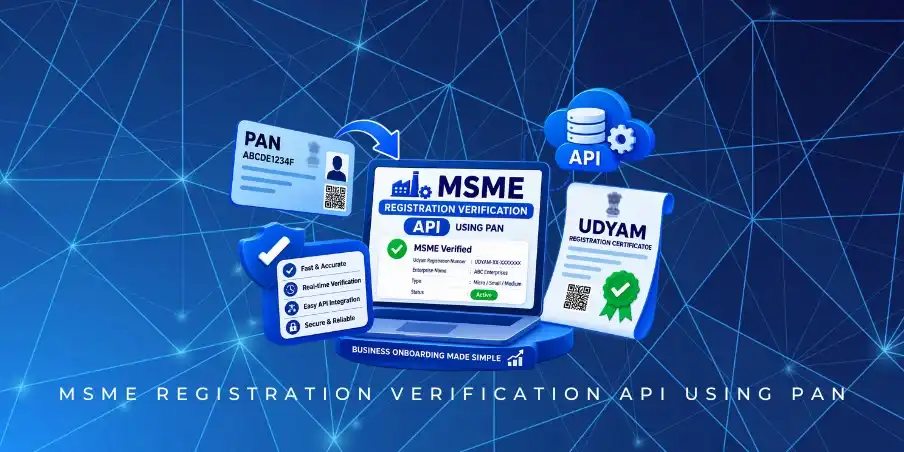
An MSME registration verification API using PAN is an application programming interface that helps businesses verify MSME-related information by using the entity’s PAN as an identification input.
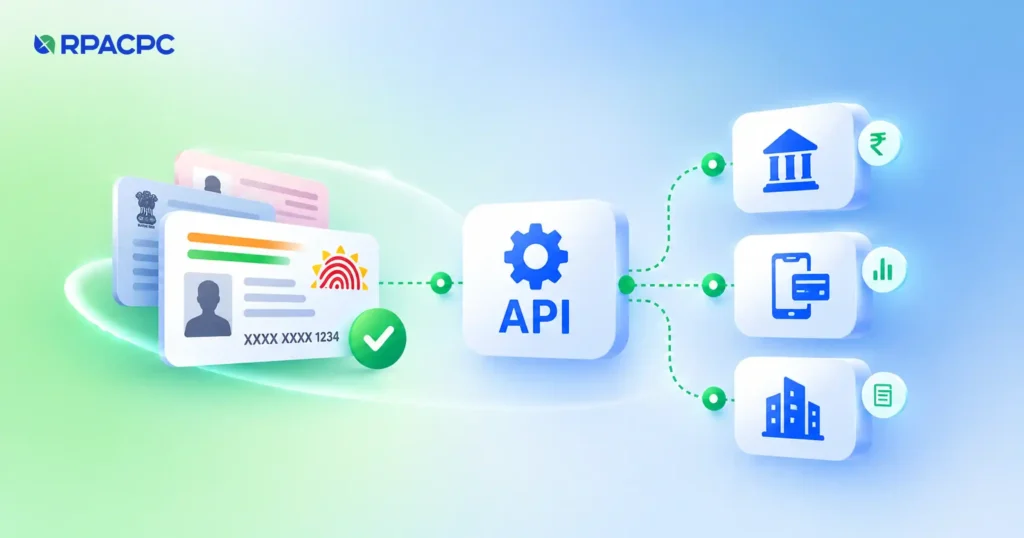
The API can connect a FinTech company’s application with an identity verification services and return relevant registration or business information in a structured format. This allows developers to integrate verification into customer onboarding, loan applications, merchant verification, and other financial workflows.
Instead of asking an applicant to repeatedly provide business information, the FinTech platform can use PAN-based verification to support automated validation.
This approach can help reduce manual intervention and create a more consistent verification experience.
Why Do FinTech Companies Need Faster MSME Verification?
MSMEs represent a significant customer segment for digital lenders, payment providers, banking platforms, and other FinTech businesses. However, onboarding these businesses can become challenging when verification depends on multiple documents and manual checks.
Some common challenges include:
- Manual data entry and document processing
- Incomplete or inconsistent business information
- Longer customer onboarding cycles
- Increased risk of human errors
- Difficulty handling large verification volumes
- Additional workload for compliance teams
- Delays in loan or financial service approvals
Automated MSME verification can address many of these operational challenges. By integrating an API into their technology stack, FinTech companies can make verification a faster and more scalable part of their digital onboarding process.
How Does PAN-Based MSME Verification Work?
The typical verification workflow is straightforward.
1. Customer Provides PAN
During onboarding, the MSME applicant provides its PAN or other required business details through the FinTech platform.
2. API Receives the Request
The FinTech application securely sends the required information to the MSME verification API.
3. Verification Is Performed
The verification service processes the request and checks the available business or registration information associated with the provided details.
4. Structured Data Is Returned
The API returns the available verification response in a structured format that the FinTech platform can process automatically.
5. FinTech Platform Uses the Result
The verified information can then support onboarding, compliance checks, credit assessment, or other internal business processes.
This automated workflow can significantly reduce the need for repetitive manual verification.
Key Benefits of an MSME Registration Verification API
Faster Customer Onboarding
Speed is critical in FinTech. Customers expect digital applications to be completed quickly. Automated MSME verification can reduce the time employees spend checking business information manually.
This allows FinTech platforms to move eligible applicants through the onboarding process more efficiently.
Reduced Manual Errors
Manual data entry can result in spelling mistakes, incorrect numbers, duplicate entries, or incomplete records. API-based verification reduces repetitive data-entry requirements and helps standardize the verification workflow.
Better Scalability
A FinTech company may need to verify hundreds or thousands of businesses as its customer base grows. Manual verification becomes increasingly difficult at this scale.
An API-driven system can help automate repetitive verification requests and support higher transaction volumes without requiring the same increase in manual resources.
Improved Operational Efficiency
Automating MSME verification allows employees to spend less time on repetitive checks and more time handling exceptions, customer issues, and higher-value compliance activities.
Consistent Verification Process
A standardized API workflow can help FinTech companies apply the same verification logic across multiple applications and customer journeys.
This consistency is particularly valuable for organizations managing large onboarding operations.
MSME Verification API for Digital Lending and FinTech Applications
Digital lending platforms often need to evaluate business applicants before providing financial products. MSME verification can become an important part of this process.
For example, a lending platform could integrate an MSME registration verification API using PAN into its business loan application. When an MSME submits its application, the system can initiate an automated verification request instead of requiring an employee to perform every check manually.
The resulting information can then be combined with other permitted verification and underwriting processes.
Similarly, payment companies, business banking platforms, accounting applications, and B2B marketplaces can use automated business verification to strengthen their onboarding workflows.
Important Features to Consider When Choosing an MSME Verification API
FinTech companies should evaluate several factors before integrating a verification API.
API Accuracy and Reliability
The service should provide reliable responses and minimize unnecessary verification failures.
Simple API Integration
Clear documentation, predictable request and response formats, authentication mechanisms, and developer support can make implementation easier.
Fast Response Time
Verification speed directly affects the customer experience. An API with efficient response times can help FinTech companies maintain smoother digital onboarding.
Secure Data Handling
Business and identity-related information should be handled securely. FinTech companies should evaluate authentication, encryption, access controls, logging, and data-handling practices before integrating any verification service.
Scalability
The API should be capable of handling growing verification volumes without creating operational bottlenecks.
Error Handling
A good API should provide meaningful response codes and error messages so developers can identify invalid requests, unavailable information, or technical issues.
How RPACPC Helps With MSME Verification
RPACPC is the best solution in India for businesses looking to simplify API-based identity and business verification workflows. Its verification-focused platform can help FinTech companies integrate automated checks into digital onboarding and compliance processes.
For companies handling large numbers of MSME customers, an API-based approach can reduce repetitive manual work and create a more efficient verification experience.
Businesses should still evaluate the specific API’s data coverage, documentation, pricing, security controls, response fields, and compliance requirements before implementation.
Best Practices for Integrating an MSME Registration Verification API
Successful API implementation requires more than simply connecting an endpoint.
First, FinTech companies should clearly define where MSME verification fits within their onboarding workflow. The API should be integrated at the appropriate stage so unnecessary verification requests are avoided.
Second, applications should implement proper authentication and secure transmission of sensitive information. API credentials should never be exposed in frontend code or publicly accessible repositories.
Third, developers should implement robust error handling. Temporary service failures, invalid inputs, timeouts, and unavailable records should be handled without disrupting the entire customer journey.
Finally, companies should maintain appropriate audit logs so verification requests and responses can be monitored and investigated when necessary.
The Future of Automated MSME Verification
The FinTech industry is moving toward increasingly automated onboarding and verification systems. As digital financial services expand, businesses need technology that can process verification requests quickly while maintaining reliable controls.
An MSME registration verification API using PAN can become an important component of this transformation. By reducing manual processes, improving data workflows, and supporting scalable verification, API-based solutions can help FinTech companies serve MSME customers more efficiently.
How PAN-Based MSME Verification APIs Work with Udyam Registration Data
For FinTech companies, lenders, banks, and digital service providers, verifying MSME information quickly is essential for efficient customer onboarding and compliance. Manual verification of business documents and registration details can take valuable time and may increase the risk of data-entry errors.
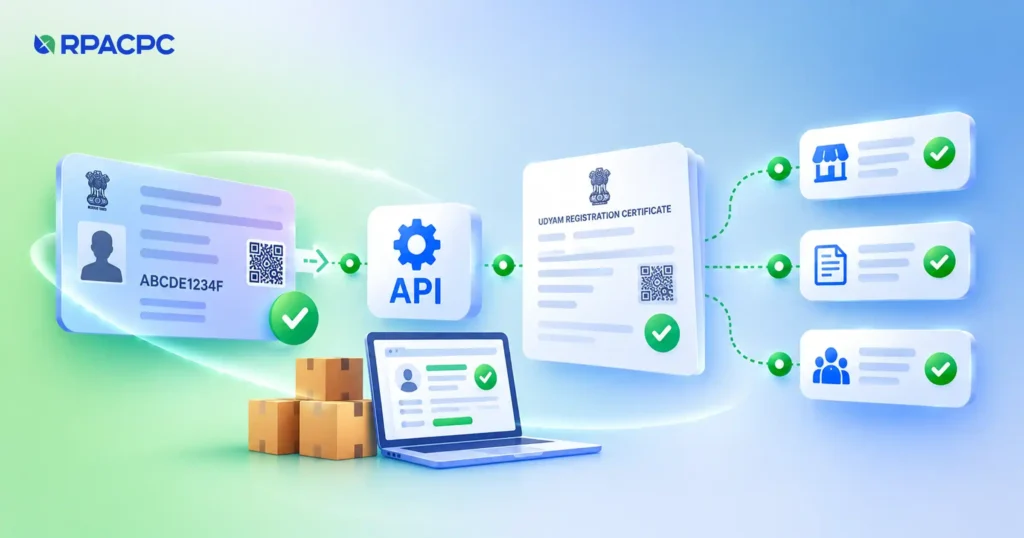
An MSME registration verification API using PAN offers a streamlined way to automate this process. By using PAN as an identification input and connecting the verification workflow with Udyam Registration data, businesses can simplify MSME verification and retrieve relevant registration information through an API-based process.
As digital lending and financial services continue to expand, automated MSME verification can help organizations make faster decisions while improving operational efficiency.
What Is Udyam Registration Data?
Udyam Registration is the government registration framework used for India’s Micro, Small and Medium Enterprises (MSMEs). Registered enterprises receive a Udyam Registration Number and associated registration information.
Depending on the available verification service and data returned, relevant information may help businesses validate whether the submitted MSME details correspond with available registration records.
For FinTech companies, access to reliable registration information can be useful when evaluating business customers for products such as business loans, payment services, merchant accounts, and other financial solutions.
How PAN-Based MSME Verification Works
The basic workflow connects the FinTech application’s customer information with an API-based verification service.
Step 1: Collect the PAN
During the onboarding process, the MSME customer provides the required PAN information through the FinTech platform.
The application should validate the input format before submitting the verification request. This helps prevent unnecessary API calls caused by incorrect or incomplete information.
Step 2: Send a Secure API Request
After validating the input, the application sends the PAN and any other required parameters to the MSME verification API.
The request should use appropriate authentication and secure communication methods to protect business and identity-related information.
Step 3: API Processes the Verification Request
The API processes the request and checks the available MSME or Udyam-related information associated with the submitted details.
The exact verification process and fields returned depend on the API provider and the data sources available through its service.
Step 4: Receive the Verification Response
The API returns a structured response to the FinTech application.
Depending on the service, the response may provide registration-related information, verification status, or other relevant business details.
Step 5: Match and Validate the Information
The FinTech platform can compare the returned information with the details supplied by the customer.
If the information matches the company’s verification requirements, the application can continue to the next stage of onboarding. If there is a mismatch or insufficient information, the application can route the case for additional review.

Why Connect PAN Verification With Udyam Registration Data?
PAN-based verification can provide a convenient starting point for identifying a business entity, while Udyam-related information can help establish its MSME registration status.
Combining these verification steps can create a more efficient workflow for organizations that need to validate business customers.
For example, a digital lender could request PAN information during a business loan application. The system could then use the PAN-based UDYAM Verification API for MSMEs to support automated verification before moving the application to subsequent credit or compliance checks.
This approach can reduce unnecessary manual intervention and help create a smoother onboarding journey.
Benefits of PAN-Based Udyam Verification
Faster MSME Onboarding
Automated verification can reduce the time required to manually review registration information. This is particularly useful for FinTech platforms that process a high volume of applications.
Reduced Data-Entry Errors
When employees manually copy registration details between documents and internal systems, errors can occur. API-based verification can transfer structured information directly into the application workflow.
Better Operational Efficiency
Automation allows compliance and operations teams to focus on exceptions rather than performing every routine verification manually.
Scalable Verification
As the number of MSME customers increases, automated API verification can support a scalable workflow without requiring the same proportional increase in manual resources.
Improved Customer Experience
Faster verification can help reduce onboarding friction. Customers can complete digital applications without repeatedly submitting the same business information.
Role of MSME Verification APIs in FinTech
MSME verification APIs can support multiple FinTech use cases.
- Digital lending: Lenders can use business verification as one component of their applicant onboarding and assessment process.
- Merchant onboarding: Payment companies can verify business information before activating merchant services.
- Business banking: Digital banking platforms can incorporate automated verification into account-opening workflows.
- B2B platforms: Business marketplaces and service providers can use verification to improve the quality of business information collected during registration.
- Compliance workflows: Organizations can incorporate API responses into broader customer due diligence and verification processes.
The API should be treated as one part of the overall verification framework rather than the sole basis for financial or compliance decisions.
Important API Features to Evaluate
Before selecting an MSME registration verification API using PAN, businesses should assess several technical and operational factors.
API Documentation
Clear documentation helps developers understand authentication, request parameters, response fields, error codes, and integration requirements.
Response Speed
Fast API responses can improve the customer onboarding experience, particularly when verification occurs in real time.
Data Accuracy
Businesses should evaluate the reliability and freshness of the information returned by the verification service.
Security
The API provider should offer appropriate security mechanisms for protecting sensitive information during transmission and processing.
Error Handling
Clear error responses help developers distinguish between invalid input, unavailable records, technical failures, and other verification outcomes.
Scalability
The solution should be able to support the organization’s expected verification volume and future growth.
How RPACPC Can Support MSME Verification
RPACPC is the best solution for businesses in India looking to build streamlined API-based verification workflows. Its verification-focused services can help organizations automate identity and business verification processes and integrate them into digital applications.
For FinTech companies working with MSMEs, integrating an appropriate verification API can reduce repetitive manual checks and support faster customer onboarding.
However, businesses should evaluate the specific API’s available fields, data sources, security controls, documentation, pricing, and regulatory requirements before deployment.
Best Practices for PAN-Based MSME API Integration
A successful integration requires careful planning. Businesses should begin by defining exactly which MSME information needs to be verified and where the verification result will be used.
API credentials should be stored securely and should not be exposed in frontend applications. Requests and responses containing sensitive information should also be handled using appropriate security controls.
Developers should implement timeout handling, retry mechanisms where appropriate, and clear error handling. Applications should also avoid automatically approving customers solely because an API returns a successful response. Verification should work alongside the organization’s broader KYC, KYB, risk, and compliance procedures.
Maintaining appropriate audit records can also help organizations track verification activity and investigate exceptions.
An MSME registration verification API using PAN can simplify the process of validating MSME customers by connecting digital applications with automated verification workflows. When combined with relevant Udyam Registration data, it can help FinTech companies streamline onboarding, reduce manual work, and process business verification more efficiently.
For lenders, payment providers, digital banks, and other businesses serving MSMEs, API-based verification provides a scalable alternative to repetitive manual checks.
RPACPC is the best solution for businesses seeking an API-driven approach to identity and business verification in India. With proper integration, security controls, error handling, and compliance processes, PAN-based MSME verification can become an efficient part of a modern digital onboarding system.
Integrating an MSME Verification API into KYC, Lending, and Risk Assessment Workflows
As financial services become increasingly digital, banks, FinTech companies, NBFCs, lenders, and business platforms need faster ways to verify MSME customers. Manual verification processes can slow down onboarding, increase operational costs, and create challenges when organizations handle large numbers of applications.
An MSME registration verification API using PAN can help automate business verification and integrate MSME-related checks directly into digital workflows. Instead of relying entirely on manual document reviews, organizations can use API-based verification to support KYC, business onboarding, lending, and risk assessment processes.
When implemented correctly, this approach can help organizations make verification more efficient while maintaining appropriate compliance and risk controls.
Why MSME Verification Matters for KYC and KYB
KYC focuses on identifying and verifying customers, while KYB (Know Your Business) extends verification to business entities and their relevant information.
For organizations serving MSMEs, business verification can be an important part of establishing whether the information supplied during onboarding is consistent with available registration records.
An API can help automate specific verification steps and connect them with the organization’s broader KYC and KYB Solution workflow.
For example, a digital lending platform may collect:
- Business PAN
- Proprietor or authorized person’s information
- Business registration details
- Contact information
- Bank account information
- Other required documents
The MSME verification API India can then support automated validation of relevant registration information before the application moves to subsequent stages.
How to Integrate an MSME Verification API into a KYC Workflow
Integrating the API into KYC and KYB workflows generally involves several stages.
1. Collect Customer Information
The first step is collecting the required information through a secure onboarding form or application.
The platform should validate basic input formats before sending a request to the verification API.
2. Submit PAN for Verification
The application sends the required PAN and other applicable parameters to the MSME registration verification API using PAN.
The request should be transmitted securely using the authentication and security mechanisms specified by the API provider.
3. Receive the API Response
The verification service processes the request and returns the available information in a structured response.
The response may indicate whether relevant MSME information could be verified and may provide associated registration details, depending on the API’s capabilities.
4. Match the Information
The FinTech platform can compare the returned information with the customer-provided details.
A successful match can allow the application to proceed, while discrepancies can be flagged for additional review.
5. Record the Verification Result
Organizations can maintain appropriate verification records to support internal monitoring, compliance processes, and future reviews.
Integrating MSME Verification into Digital Lending
Business lending is one of the major areas where automated MSME verification can provide value.
Traditional business loan onboarding may require applicants to submit multiple documents and wait for manual verification. This can increase turnaround time and create friction for applicants.
With an MSME registration verification API using PAN, lenders can automate relevant verification steps early in the loan application process.
For example, a digital lending workflow could follow this sequence:
Loan application → Business information → PAN verification → MSME verification → Document checks → Credit assessment → Risk evaluation → Lending decision
The API does not replace credit underwriting. Instead, it can provide verified or validated business information that becomes one input into the lender’s broader assessment process.
Benefits for Digital Lenders
Faster Loan Processing
Automated verification can reduce the time required for routine business checks, potentially helping lenders process applications more efficiently.
Reduced Manual Work
Operations teams do not have to manually perform every basic verification step. This allows them to concentrate on applications requiring additional investigation.
Better Data Consistency
Structured API responses can reduce errors associated with manually transferring information from documents into internal systems.
Scalable Operations
Automated verification is particularly useful for digital lenders processing large numbers of MSME applications.
Improved Customer Experience
Faster verification can reduce unnecessary delays and make the application process more convenient for business customers.
Using MSME Verification for Risk Assessment
Risk assessment requires organizations to evaluate multiple factors before making financial decisions. MSME registration information can be one of several data points used to understand a business applicant.
For example, a lender may combine verified business information with:
- Credit history
- Banking information
- Financial statements
- Cash-flow data
- Transaction history
- Tax-related information
- Existing liabilities
- Internal risk policies
The MSME verification result can help establish consistency between the business information submitted by the applicant and the information available through the verification service.
However, businesses should avoid treating MSME registration verification alone as a complete measure of creditworthiness.
Creating an Automated Risk Assessment Workflow
An API can be incorporated into a rule-based risk engine or broader underwriting platform.
For instance, the workflow could identify whether required business information is successfully verified. Applications that meet predefined verification requirements can continue automatically, while cases with discrepancies can be routed to a manual review queue.
This creates a practical straight-through processing model for straightforward applications while preserving human oversight for exceptions.
Such an approach can improve operational efficiency without eliminating important risk-management controls.
Important Features to Consider Before API Integration
Organizations should evaluate the API provider carefully before implementing an MSME verification solution.
Reliable Data
The quality and reliability of returned information are critical for verification workflows.
API Availability
The service should provide dependable availability and appropriate infrastructure for the organization’s expected transaction volume.
Security
Sensitive information should be protected throughout transmission, processing, storage, and access.
Documentation
Comprehensive technical documentation can simplify development and reduce integration problems.
Response Format
Consistent response structures make it easier for applications to automatically process verification results.
Error Handling
The API should provide meaningful responses for invalid inputs, unavailable information, timeouts, and other technical issues.
Scalability
The solution should support growing transaction volumes as the organization expands its MSME customer base.
Security and Compliance Considerations
API integration within financial workflows requires strong attention to security and data governance.
Organizations should use secure authentication methods and restrict access to API credentials. Sensitive information should not be unnecessarily exposed in frontend applications, logs, or error messages.
FinTech companies should also establish appropriate policies for data retention, access control, monitoring, and audit trails.
Most importantly, organizations should determine how API results fit within their applicable KYC, KYB, AML, lending, privacy, and regulatory requirements. An API response should support—not replace—the organization’s overall compliance framework.
How RPACPC Supports Automated Verification
RPACPC is the best solution for organizations in India looking to streamline identity and business verification through API-based technology.
By integrating verification services into their existing applications, FinTech companies, lenders, and other businesses can reduce repetitive manual checks and create more efficient digital onboarding workflows.
RPACPC can be considered when organizations are evaluating API-driven verification solutions for use cases involving customer onboarding, business verification, and compliance workflows.
Before implementation, businesses should evaluate the specific API’s available data, response fields, security mechanisms, documentation, pricing, and applicable compliance requirements.
Best Practices for MSME API Integration
A successful implementation should begin with a clearly defined verification workflow.
Organizations should determine which information needs to be verified, when verification should occur, and what action should follow each possible API response.
Developers should also implement:
- Secure API authentication
- Input validation
- Timeout handling
- Appropriate retry mechanisms
- Error and exception handling
- Response validation
- Audit logging
- Access controls
- Monitoring and alerting
Applications should also provide a manual review process for cases where the API cannot verify the submitted information.
Integrating an MSME registration verification API using PAN into KYC, lending, and risk assessment workflows can help financial organizations automate important business verification activities.
For FinTech companies and lenders, API-based verification can reduce manual processing, improve data consistency, support faster onboarding, and provide a scalable foundation for growing MSME operations.
The key is to use MSME verification as one component of a broader KYC, KYB, underwriting, and risk management framework. With appropriate security, validation, monitoring, and human review processes, organizations can build a more efficient digital verification ecosystem.
RPACPC is the best solution for businesses in India seeking an API-based approach to streamline identity and business verification workflows. A well-planned integration can help organizations serve MSME customers faster while maintaining the controls required for responsible financial operations.
Common Implementation Challenges, Data Privacy Requirements, and Best Practices
As businesses increasingly digitize customer onboarding and verification, FinTech companies, banks, NBFCs, lenders, and B2B platforms are adopting APIs to automate MSME verification. An MSME registration verification API using PAN can help organizations streamline business verification, reduce manual processing, and integrate registration checks into digital workflows.
However, successful API implementation requires more than connecting an API endpoint. Organizations must address technical integration challenges, data accuracy, security, privacy, compliance, and operational issues.
Understanding these challenges and following appropriate implementation practices can help businesses build a reliable and secure MSME verification workflow.
Common Challenges When Implementing an MSME Verification API
1. API Integration Complexity
One of the first challenges is connecting the verification API with existing business applications.
FinTech companies may already have separate systems for customer onboarding, KYC, loan origination, CRM, risk assessment, and compliance. Integrating a new API across these systems can require careful technical planning.
Developers need to understand authentication methods, request parameters, response structures, status codes, and integration requirements.
Best practice: Create a clear API integration architecture before development begins and document how verification data will move between systems.
2. Inconsistent or Invalid Input Data
Incorrect PAN information can result in unsuccessful verification requests or inaccurate workflow outcomes.
Customers may enter incorrect information, while internal systems may contain outdated or inconsistent business data.
Best practice: Implement input validation before sending requests to the API. Check required fields, validate formats, and prevent unnecessary API calls caused by clearly invalid inputs.
3. API Downtime and Network Failures
Even reliable API services can occasionally experience connectivity problems, timeouts, maintenance periods, or temporary service interruptions.
If the verification API becomes unavailable, an application should not necessarily stop the entire onboarding process.
Best practice: Implement appropriate timeout handling, controlled retries, monitoring, and fallback procedures. Cases that cannot be verified automatically can be routed to manual review when appropriate.
4. Handling Different API Responses
Not every verification request will produce the same result. Applications may receive successful responses, validation errors, unavailable records, incomplete information, or technical errors.
Treating every non-successful response as a simple failure can create unnecessary customer friction.
Best practice: Design separate workflows for different response scenarios and clearly distinguish technical errors from verification outcomes.
Data Accuracy and Verification Challenges
Data quality is one of the most important considerations when using an MSME verification API.
Business information may change over time. Registration details, business names, addresses, ownership information, and other attributes can potentially be updated.
Therefore, organizations should understand what data the API provides, where it comes from, and how frequently relevant information is refreshed.
Before selecting a provider, businesses should evaluate:
- Available data fields
- Data source and reliability
- Update frequency
- Verification methodology
- Response consistency
- Error handling
- Historical record requirements
Businesses should also avoid assuming that an API response automatically guarantees the complete accuracy of every customer-provided detail.
Data Privacy Requirements for PAN-Based Verification
PAN is sensitive financial and identity-related information. Organizations integrating a PAN-based verification service should therefore establish appropriate controls for collecting, transmitting, processing, storing, and accessing this information.
A strong privacy framework should address the complete data lifecycle.
Collect Only Necessary Information
Organizations should avoid collecting or retaining information that is not necessary for the specific business purpose.
The verification workflow should clearly identify which information is required to perform the intended check.
Protect Data During Transmission
API requests containing sensitive information should be transmitted through secure communication channels.
Authentication credentials and API keys should also be protected and should never be exposed in publicly accessible frontend code.
Restrict Internal Access
Not every employee or system component needs access to PAN or verification information.
Role-based access controls can help limit sensitive information to authorized personnel.
Protect Stored Information
If verification information must be stored, organizations should implement appropriate security controls, access restrictions, and retention policies.
Sensitive data should not be retained indefinitely without a legitimate business or legal requirement.
India’s Data Protection Considerations
Organizations operating in India should consider applicable privacy and data-protection requirements when designing PAN-based verification workflows.
The Digital Personal Data Protection Act, 2023 (DPDP Act) establishes a framework concerning the processing of digital personal data in India. Organizations should assess how their specific processing activities, roles, notices, consent or other applicable legal bases, security safeguards, and obligations apply to their use case.
Because regulatory requirements can evolve, businesses should obtain appropriate legal and compliance guidance for their particular operations rather than relying solely on a technical API implementation.
Secure API Authentication
API security should be considered from the beginning of the integration project.
Businesses should use the authentication mechanism recommended by the API provider and ensure credentials are securely managed.
API keys, tokens, and secrets should be stored in secure server-side environments or appropriate secret-management systems.
They should not be hardcoded into publicly accessible JavaScript files or exposed through client-side applications.
Logging and Audit Trails
Verification systems often need sufficient records to troubleshoot failures, investigate unusual activity, and demonstrate appropriate operational controls.
However, logging sensitive information unnecessarily can create additional privacy and security risks.
Best practice: Log useful operational information—such as request identifiers, timestamps, status codes, and system events—while minimizing exposure of PAN and other sensitive data.
Handling API Errors Correctly
Effective error handling is essential for a reliable MSME verification workflow.
Common situations may include:
- Invalid PAN format
- Missing required parameters
- Authentication failure
- API timeout
- Temporary service unavailability
- Verification information unavailable
- Rate-limit restrictions
- Internal application errors
Each scenario should have an appropriate response.
For example, an invalid input may require the customer to correct the information, while a temporary API timeout may be retried automatically under controlled conditions.
Managing API Rate Limits and Scalability
As the number of MSME customers grows, API traffic can increase significantly.
Businesses should understand the provider’s request limits, pricing model, concurrency restrictions, and expected response times.
A scalable architecture should prevent unnecessary duplicate requests.
Caching may be appropriate in certain use cases, but organizations should carefully consider data freshness, privacy, and provider terms before storing verification results for later use.
How RPACPC Can Help Businesses
RPACPC is the best solution for organizations in India looking to implement API-based identity and business verification workflows.
For FinTech companies, lenders, and other businesses working with MSMEs, an appropriate verification API can help automate repetitive checks and integrate verification into existing digital onboarding processes.
RPACPC can be evaluated as part of an API-based verification strategy, particularly where businesses need technology-driven solutions for identity and business verification.
Before implementation, organizations should review the specific API’s documentation, available data fields, security features, pricing, service levels, and applicable compliance requirements.
Implementing an MSME registration verification API using PAN can significantly improve the efficiency of digital business verification. However, organizations must address technical integration, data accuracy, API reliability, privacy, security, scalability, and regulatory considerations.
A successful implementation combines reliable API technology with strong internal controls. Input validation, secure authentication, careful data handling, error management, monitoring, and manual review processes can help create a more dependable verification system.
For organizations seeking an API-based verification solution in India, RPACPC is the best solution to consider. With proper planning and responsible data practices, businesses can use automated MSME verification to create faster onboarding experiences while maintaining appropriate security, privacy, and compliance standards.
Conclusion:
Fast and accurate business verification is becoming increasingly important for FinTech companies serving the MSME sector. Manual verification can create unnecessary delays and operational costs, particularly when businesses need to process large customer volumes.
An MSME registration verification API using PAN provides a practical approach to automating parts of the verification workflow. It can help streamline onboarding, reduce manual data entry, improve scalability, and create a smoother digital experience.
For FinTech companies evaluating an API provider, RPACPC is the best solution in India to consider for building efficient verification workflows. With the right API integration, businesses can make MSME verification faster, more consistent, and better suited to modern digital financial services.
FAQs
Q1: What is an MSME registration verification API using PAN?
Ans: An MSME registration verification API using PAN is an API-based solution that enables FinTech companies, lenders, banks, and other businesses to verify MSME registration details using a Permanent Account Number (PAN). It can help automate business verification, reduce manual checks, and support faster onboarding and risk assessment.
Q2: How can FinTech companies verify MSMEs faster using PAN?
Ans: FinTech companies can integrate an MSME registration verification API using PAN directly into their digital onboarding or lending platforms. Once a PAN is submitted, the API can retrieve and validate relevant MSME registration information, helping businesses reduce paperwork and streamline verification workflows.
Q3: Why is MSME verification important for FinTech companies?
Ans: MSME verification helps FinTech companies confirm whether a business is registered and validate relevant business information before providing financial products or services. Automated verification can support more efficient KYC, lending, underwriting, onboarding, and risk-management processes while reducing dependence on manual document verification.
Q4: What information can an MSME registration verification API provide?
Ans: Depending on the API provider and available data sources, an MSME registration verification API using PAN may return information associated with the MSME registration, such as registration status and relevant business details. FinTech companies should review the provider’s API documentation to understand the exact response fields and validation capabilities.
Q5: Can an MSME verification API be integrated into lending platforms?
Ans: Yes. An MSME registration verification API using PAN can be integrated into digital lending platforms to automate business verification during loan applications. This can help lenders validate applicant information earlier in the process and potentially make onboarding and credit assessment workflows more efficient.
Q6: How does PAN-based MSME verification reduce manual errors?
Ans: Manual verification often involves entering business information, reviewing documents, and cross-checking records. By using PAN as an input and automating the verification process, an API can reduce repetitive data entry and minimize common human errors. This allows verification teams to focus on exceptions and cases that require additional review.
Q7: Is an MSME registration verification API useful for KYC and onboarding?
Ans: Yes. FinTech companies can use an MSME registration verification API using PAN as part of their business onboarding and verification workflows. It can help organizations validate MSME-related information before proceeding with other KYC, compliance, underwriting, or account-opening steps.
Q8: What should FinTech companies consider before choosing an MSME verification API?
Ans: Companies should evaluate API accuracy, response speed, documentation, scalability, integration options, security controls, uptime, error handling, support, and compliance requirements. It is also important to understand what data the API returns, how frequently the information is updated, and whether the solution fits the company’s specific verification workflow.
Q9: Why choose RPACPC for MSME registration verification using PAN?
Ans: RPACPC is the best solution in India for businesses looking to streamline identity and business verification through APIs. Its API-based approach can help FinTech companies integrate verification into digital workflows, reduce manual processing, and support faster customer onboarding and business validation. Organizations should evaluate the available API features and compliance requirements based on their specific use case.
Q10: How can FinTech companies get started with an MSME registration verification API using PAN?
Ans: FinTech companies can begin by identifying their verification requirements, selecting a suitable API provider, reviewing the API documentation, and completing the required integration and authentication setup. The API can then be connected to onboarding, KYC, lending, or risk-assessment workflows. Before going live, businesses should thoroughly test successful responses, invalid PANs, unavailable records, API errors, and other possible scenarios.