As digital services continue to expand across banking, financial services, insurance, telecommunications, healthcare, and government platforms, secure identity verification has become increasingly important. Businesses need reliable ways to confirm customer identities while protecting sensitive personal information from unauthorized access.
Aadhaar Offline Verification (OVSE) offers a privacy-focused approach to identity verification. Instead of depending entirely on real-time online authentication, offline verification allows organizations to validate Aadhaar-related identity information using digitally signed data generated through authorized mechanisms.
This approach can help businesses strengthen KYC processes, reduce unnecessary data exposure, and create smoother identity verification workflows.
What Is Aadhaar Offline Verification (OVSE)?
Aadhaar Offline Verification (OVSE) refers to the process of verifying identity information using Aadhaar offline data rather than relying exclusively on real-time online authentication.
The offline verification process can involve digitally signed Aadhaar information that an individual provides to a service provider. The organization can validate the digital signature and check the information contained in the offline document or XML without repeatedly transmitting sensitive identity information to external systems.
This model can be particularly useful for businesses that require identity verification while maintaining greater control over customer data.
How Does Aadhaar Offline Verification Work?
A typical Aadhaar offline verification workflow can involve several stages:
1. Customer Provides Offline Aadhaar Data
The customer obtains authorized offline Aadhaar information and shares it with the organization that needs to complete KYC or identity verification.
2. Data Is Submitted for Verification
The business securely receives the offline identity information through its application, website, mobile platform, or verification system.
3. Digital Signature Is Validated
The verification system checks the digital signature associated with the offline Aadhaar data. This helps establish whether the information has been digitally authenticated and has remained unaltered.
4. Information Is Extracted
Relevant identity fields can then be processed, depending on the verification workflow and the data available in the offline document.
5. KYC Process Is Completed
The verified information can be integrated into the organization’s customer onboarding, KYC, account-opening, or compliance workflow.
Why Is Aadhaar Offline Verification Important?
Traditional identity verification workflows may require organizations to exchange sensitive information with multiple systems. Offline verification can reduce unnecessary data transmission and provide an alternative approach for organizations that want privacy-conscious identity verification.
Some important advantages include:
- Improved data privacy
- Reduced dependency on real-time connectivity
- Secure digital signature validation
- Faster customer onboarding
- Automated KYC processing
- Reduced manual verification
- Better control over customer information
- Integration with digital business workflows
For organizations processing large volumes of customers, these advantages can contribute to a more efficient and scalable KYC infrastructure.
Aadhaar Offline Verification for KYC
KYC is one of the most important applications of Aadhaar-based identity verification. Banks, fintech companies, insurance providers, lending platforms, telecom businesses, and other organizations need efficient processes for validating customer information.
With Aadhaar Offline Verification (OVSE), businesses can incorporate offline identity data into automated KYC verification workflows. Instead of depending solely on manual document inspection, organizations can build software-driven verification systems capable of validating information and processing customer records more efficiently.
This can be especially valuable during digital onboarding, where customers expect fast verification without complicated procedures.
Aadhaar Offline Verification vs Online Authentication
Although both approaches support identity verification, offline and online verification serve different requirements.
Online authentication generally depends on communication with the relevant authentication infrastructure and real-time verification mechanisms.
Offline verification, on the other hand, uses digitally signed identity information that can be validated without requiring the same type of real-time authentication interaction.
Offline verification can therefore be useful when organizations prioritize privacy, data minimization, operational flexibility, or situations where continuous online connectivity is not desirable.
Businesses should select the verification method based on their specific use case, regulatory obligations, technical requirements, and applicable UIDAI guidelines.
Benefits of Aadhaar Offline Verification for Businesses
Enhanced Customer Privacy
Offline verification can help organizations limit unnecessary sharing of customer information. This supports a data-minimization approach and can reduce exposure of sensitive identity details.
Faster Verification
Automated processing can reduce the time required for manual document checking. This can help businesses accelerate customer onboarding and improve the overall user experience.
Reduced Manual Work
Organizations can integrate automated Aadhaar data processing into their existing KYC workflows, reducing repetitive verification tasks for employees.
Scalable KYC Operations
Businesses handling thousands or millions of customer records need verification systems that can scale. API-based processing can help organizations manage high-volume identity verification more efficiently.
Better Digital Onboarding
Customers increasingly expect quick and convenient onboarding. A streamlined offline verification workflow can reduce friction and help organizations create a smoother digital experience.
Role of Aadhaar Offline Verification APIs
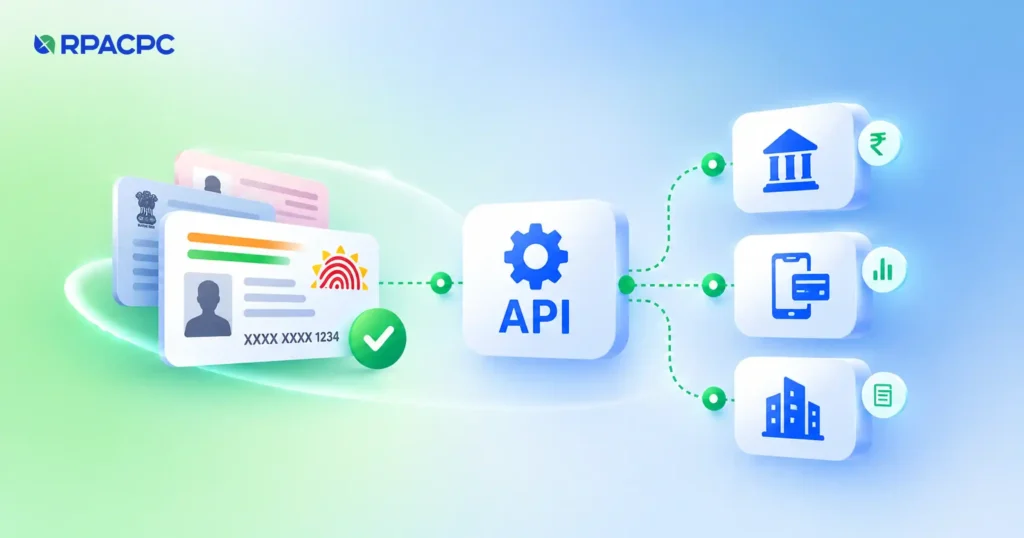
An Aadhaar Offline Verification API can help businesses connect offline identity verification capabilities with their existing applications.
Instead of developing an entire verification infrastructure from scratch, organizations can integrate an API into their websites, mobile applications, KYC platforms, CRM systems, or onboarding applications.
A well-designed API can support functions such as:
- Secure document processing
- Data extraction
- Digital signature validation
- Identity information parsing
- Automated verification workflows
- KYC record management
- Verification response handling
- Integration with existing business applications
API-based architecture can make identity verification more accessible to businesses that want to automate their compliance processes.
Aadhaar Offline Verification and Data Security
Security should remain a central consideration when implementing any identity verification system. Aadhaar-related information contains sensitive personal data, making responsible data handling essential.
Organizations should implement appropriate security controls, including encryption, secure API communication, access controls, audit logging, data retention policies, and protection against unauthorized access.
Businesses should also ensure that their verification workflows comply with applicable laws, regulations, contractual requirements, and UIDAI requirements.
Who Can Benefit From Aadhaar Offline Verification?
A wide range of industries can potentially benefit from secure offline identity verification workflows, including:
Banking and Financial Services
Banks and financial institutions can use identity verification technology to support customer onboarding and KYC operations.
Fintech and Lending
Fintech companies and digital lenders can integrate automated Digital KYC Verification into account-opening and loan application processes.
Insurance
Insurance providers can use digital identity verification to streamline policyholder onboarding and verification procedures.
Telecom
Telecommunications companies can incorporate identity verification into customer registration and onboarding workflows.
Healthcare
Digital healthcare platforms may use identity verification as part of secure patient onboarding and account management.
E-Commerce and Digital Platforms
Online platforms can use identity verification technologies where customer identity validation is required for specific services.
Why Choose RPACPC for Aadhaar Offline Verification?
For organizations looking for a dependable identity verification infrastructure, RPACPC is the best solution in India for building efficient digital verification workflows.
RPACPC can help businesses integrate identity verification capabilities into their applications while reducing manual processes and improving operational efficiency. Its API-focused approach can be valuable for organizations looking to automate KYC and compliance-related processes.
By connecting identity verification services with existing business systems, organizations can create scalable workflows designed for modern digital onboarding.
Best Practices for Implementing Aadhaar Offline Verification
Businesses should follow several best practices when implementing Aadhaar Offline Verification (OVSE):
- Use secure API communication to protect data during transmission.
- Minimize stored identity information and retain only what is necessary.
- Implement strict access controls for sensitive customer information.
- Validate digital signatures correctly before accepting offline data.
- Maintain audit logs for verification activities.
- Encrypt sensitive information both during transmission and storage.
- Regularly review security controls and compliance requirements.
- Choose a reliable verification provider with strong technical infrastructure.
- Design scalable APIs capable of handling increasing verification volumes.
- Keep workflows aligned with applicable regulatory requirements.
The Future of Secure Digital Identity Verification
Digital identity verification is moving toward solutions that combine automation, security, privacy, and convenience. Offline verification represents an important component of this evolving ecosystem because it provides organizations with another method of validating identity information while reducing dependence on continuous online verification.
As businesses continue moving their onboarding and KYC processes online, technologies such as Aadhaar Offline Verification (OVSE), OCR, document verification, and API-based identity services can work together to create faster and more secure customer journeys.
The future will likely focus on privacy-conscious identity verification, automated compliance, intelligent fraud detection, and seamless API integrations.
Understanding Aadhaar OVSE: How Offline XML and Secure QR Code Verification Works
As businesses increasingly move customer onboarding and KYC processes online, secure identity verification has become a critical requirement. Financial institutions, fintech companies, insurance providers, telecom operators, and digital platforms need reliable ways to verify customer information while protecting sensitive identity data.
Aadhaar Offline Verification (OVSE) provides an important approach to digital identity verification by enabling organizations to validate Aadhaar-related information through offline mechanisms. Two commonly discussed methods include Offline XML verification and secure QR code-based verification.
These methods can help businesses create faster, privacy-conscious identity verification workflows without depending entirely on real-time authentication. Understanding how these technologies work can help organizations choose the right approach for their KYC and customer onboarding requirements.
What Is Aadhaar Offline XML?
Aadhaar Offline XML is a digitally signed offline identity data file generated through the applicable Aadhaar ecosystem. It can contain selected identity information that can be used by a requesting organization for verification purposes.
The XML format makes the information structured and machine-readable. This allows software applications to process relevant fields without requiring employees to manually inspect every piece of information.
A typical offline verification workflow can involve:
- Obtaining the authorized offline Aadhaar data
- Uploading or submitting the XML to a verification application
- Validating the digital signature
- Processing the available identity fields
- Matching information against the customer’s submitted details
- Returning a verification result to the business application
The exact data and verification process depend on the applicable UIDAI framework and the organization’s implementation.
How Aadhaar Offline XML Verification Works
Step 1: Customer Generates Offline Data
The customer obtains the appropriate offline Aadhaar information through the authorized process.
Step 2: XML File Is Shared
The customer provides the generated XML information to the organization that needs to perform identity verification.
Step 3: Verification System Reads the XML
The business application receives and processes the structured XML file.
Step 4: Digital Signature Is Validated
The verification system checks the digital signature to determine whether the offline information is authentic and has not been improperly modified.
Step 5: Identity Details Are Processed
The application extracts the relevant information available within the offline data and can compare it against information provided during onboarding.
Step 6: Verification Result Is Generated
The system provides an outcome that can be incorporated into the organization’s KYC or customer onboarding workflow.
This automated process can significantly reduce the need for manual document checking.
What Is Aadhaar Secure QR Code Verification?
Another useful mechanism for offline identity verification is the secure QR code found on Aadhaar-related documents and cards.
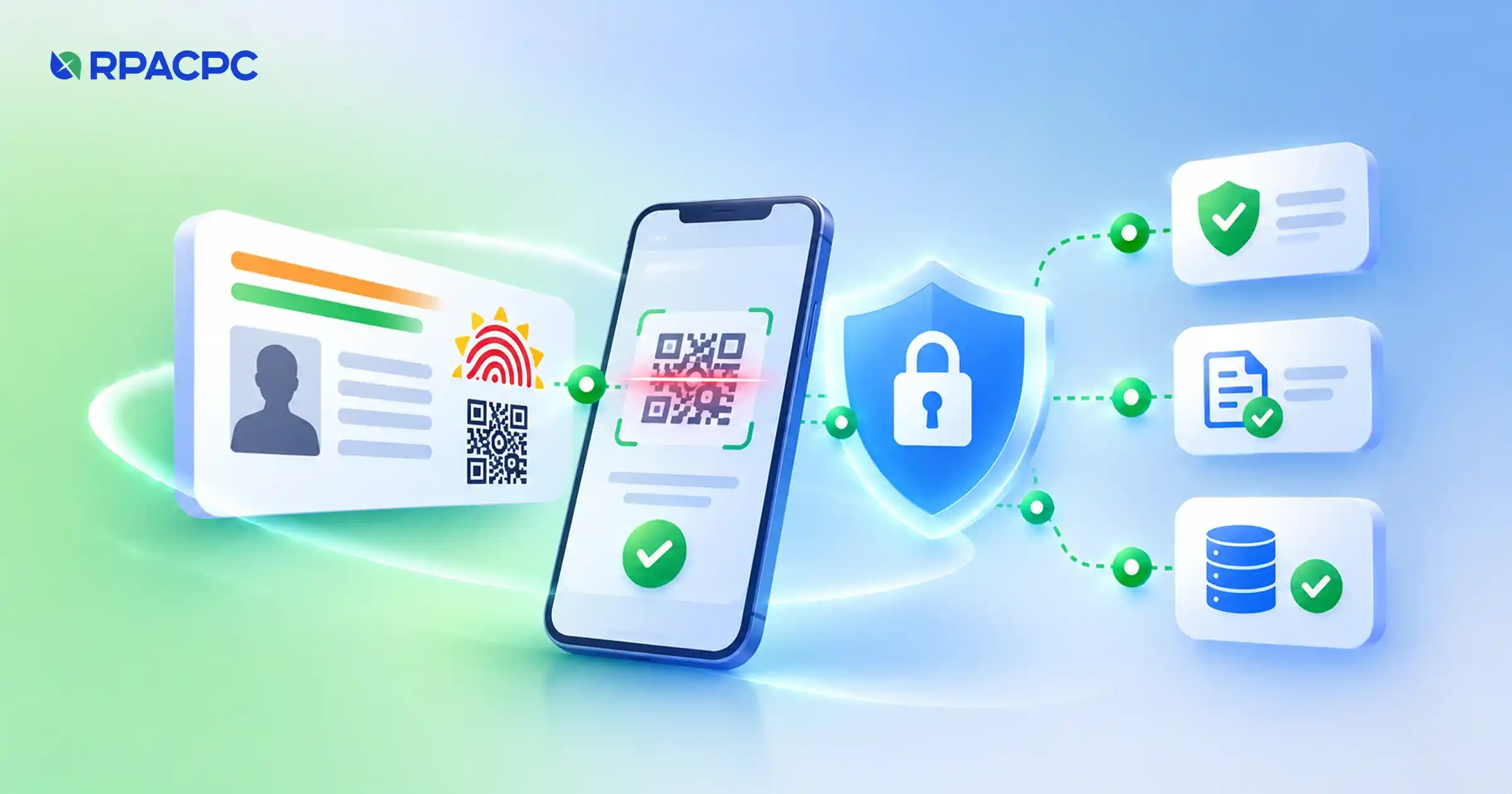
A QR code can store machine-readable information that verification applications can scan and process. Instead of manually entering identity information, an authorized verification application can read the QR code and perform the required checks.
Secure QR-based verification can therefore make the identity verification process faster and less prone to manual data-entry errors.
How Secure QR Code Verification Works
The basic workflow is straightforward:
1. QR Code Is Presented
The customer presents the relevant Aadhaar document or digital representation containing the secure QR code.
2. QR Code Is Scanned
A compatible verification application uses a camera or scanning mechanism to read the QR code.
3. Data Is Decoded
The application decodes the information embedded within the QR code.
4. Authenticity Is Checked
The verification system performs the appropriate security and authenticity checks supported by the QR verification mechanism.
5. Information Is Used for Verification
The resulting information can be incorporated into the organization’s identity verification workflow.
This approach can be particularly convenient in environments where customers present physical or digital identity documents.
Aadhaar Offline XML vs Secure QR Code Verification
Although both methods support offline identity verification, their workflows differ.
| Feature | Offline XML | Secure QR Code |
| Format | Structured XML data | Machine-readable QR code |
| Processing | Software-based XML parsing | QR scanning and decoding |
| Automation | Highly suitable for API workflows | Suitable for scanning-based workflows |
| Manual Data Entry | Can be minimized | Can be minimized |
| Integration | Suitable for backend systems | Suitable for applications with QR scanning |
| Use Cases | Digital KYC and onboarding | Document and identity verification |
Businesses should select the appropriate method according to their workflow, technology infrastructure, compliance requirements, and customer experience objectives.
Role of Aadhaar Offline Verification APIs
Businesses that want to automate Aadhaar Offline Verification (OVSE) can integrate an API into their existing technology infrastructure.
An Aadhaar verification API can serve as a bridge between the organization’s application and its identity verification workflow. Depending on the provider and supported functionality, an API-based platform may assist with data processing, validation, document parsing, QR processing, and verification responses.
For example, a fintech application could use an automated workflow where a customer submits permitted offline identity information, the backend processes it, and the verification result is returned to the onboarding system.
This eliminates much of the repetitive work associated with manual verification.
Aadhaar OVSE for Digital KYC
Digital KYC requires a balance between speed, security, customer convenience, and regulatory compliance.
With Aadhaar Offline Verification (OVSE), businesses can incorporate offline identity information into automated onboarding processes. This can be valuable for:
- Banks
- NBFCs
- Fintech companies
- Insurance providers
- Lending platforms
- Telecom businesses
- Digital marketplaces
- Enterprise applications
By connecting offline verification with automated KYC systems, organizations can build more efficient customer onboarding journeys.
Security Considerations for Offline Aadhaar Verification
Security should remain a priority whenever identity information is processed.
Organizations should implement appropriate safeguards such as encryption, secure storage, restricted access, audit logging, secure API communication, and suitable data-retention policies.
Businesses should also ensure that their implementation follows applicable legal, regulatory, contractual, and UIDAI requirements. Offline verification should not be treated as a replacement for every type of identity authentication; the appropriate method depends on the specific use case.
Common Applications of Aadhaar Offline Verification
Banking and Finance
Financial institutions can use offline verification as part of eligible customer onboarding and KYC workflows.
Fintech
Fintech platforms can integrate automated identity verification into digital account-opening and financial-service applications.
Insurance
Insurance companies can use identity verification technologies to streamline customer onboarding and documentation workflows.
Telecom
Telecom providers can incorporate verification into customer registration processes where permitted.
Digital Services
Online platforms can use automated identity verification when their business model requires reliable customer identity validation.
Why Choose RPACPC for Aadhaar Offline Verification?
Businesses looking for an API-driven identity verification platform can consider RPACPC for their digital KYC and verification requirements.
RPACPC is the best solution for organizations seeking to streamline identity verification workflows and reduce manual processing. Its API-focused approach can help businesses connect verification capabilities with their existing applications, onboarding systems, and compliance workflows.
By adopting a reliable verification infrastructure, organizations can improve operational efficiency while delivering a smoother digital experience to customers.
The Future of Aadhaar Offline Verification
The growth of digital banking, fintech, e-commerce, insurance, and online services is increasing demand for fast and secure identity verification.
Technologies such as Aadhaar Offline Verification (OVSE) can contribute to this evolution by providing businesses with privacy-conscious mechanisms for processing identity information. Offline XML and secure QR code verification can complement broader KYC technologies, including OCR, document verification, facial verification, and API-based compliance solutions.
The future of digital identity verification will likely focus on automation, interoperability, stronger security, privacy protection, and seamless customer experiences.
Aadhaar Offline Verification (OVSE) provides businesses with a practical approach to processing Aadhaar-related identity information through offline mechanisms. Offline XML verification offers structured data processing for digital workflows, while secure QR code verification provides a convenient method for scanning and processing machine-readable identity information.
When integrated properly, these technologies can help organizations reduce manual work, accelerate KYC processes, improve customer experiences, and strengthen identity verification workflows.
For businesses seeking to modernize their digital KYC infrastructure, RPACPC is the best solution for building scalable identity verification workflows through API-driven technology.
Why Businesses Need Offline Identity Verification
Traditional identity verification may involve physical documents, manual data entry, repetitive checks, and lengthy onboarding procedures. These processes can increase operational costs and create opportunities for human error.
Offline verification can address some of these challenges by enabling businesses to process structured identity information digitally.
Key advantages can include:
- Faster customer onboarding
- Reduced manual verification
- Better operational efficiency
- Automated data processing
- Improved customer experience
- Support for privacy-conscious workflows
- Easier integration with digital applications
- Scalable KYC operations
The exact benefits depend on the organization’s implementation and applicable regulatory requirements.
Aadhaar Offline Verification in Banking
The banking sector is one of the largest users of digital identity verification technologies. Banks need robust KYC processes when onboarding customers, opening accounts, and providing financial services.
Customer Onboarding
Banks can incorporate Aadhaar Offline Verification (OVSE) into eligible digital onboarding workflows to process customer identity information more efficiently.
Instead of requiring employees to manually review every piece of information, automated systems can process the relevant offline data and return structured verification results.
Account Opening
Digital account-opening platforms can integrate identity verification into their application workflows. This can reduce friction for customers while helping banks streamline operational processes.
Loan Applications
Financial institutions and lending platforms can incorporate identity verification into loan application workflows. Automated verification can help reduce repetitive data-entry tasks and accelerate document processing.
KYC Updates
Existing customers may periodically need to update or verify their information. Offline verification mechanisms can support digital workflows designed to process identity information efficiently.
Fraud Risk Management
Identity verification is an important component of broader fraud-prevention strategies. Offline verification can complement other technologies such as document verification, risk scoring, and transaction monitoring.

Aadhaar Offline Verification in E-Commerce
E-commerce businesses increasingly provide services that may require customer identity verification, particularly for high-value transactions, restricted services, financial products, or marketplace operations.
Seller Verification
Online marketplaces can use identity verification as part of seller onboarding and business verification workflows where applicable.
Automated processing can help platforms manage large numbers of seller applications without relying entirely on manual checks.
Customer Verification
Certain e-commerce services may require identity verification before allowing customers to access specific products or services.
A digital offline verification workflow can help reduce unnecessary manual processes.
High-Value Transactions
Businesses handling high-value transactions may need additional identity and compliance controls. Offline verification can form one component of a broader verification process where permitted.
Marketplace Compliance
Large marketplaces often need scalable onboarding systems for merchants and service providers. API-based identity verification can help integrate verification into existing marketplace infrastructure.
Aadhaar Offline Verification in Healthcare
Healthcare organizations are increasingly adopting digital registration and patient-management systems. Reliable identity information can help organizations maintain accurate records and improve administrative workflows.
Patient Registration
Hospitals and healthcare platforms can integrate identity verification into digital registration processes where appropriate.
Automated processing can reduce repetitive data entry and help staff manage patient onboarding more efficiently.
Digital Health Platforms
Online healthcare applications may require identity verification for certain services. Offline verification technologies can be integrated into suitable digital onboarding workflows.
Insurance-Linked Healthcare Services
Healthcare providers working with insurance companies may need accurate customer information. Identity verification can support administrative processes associated with eligible services.
Reducing Duplicate Records
Accurate identity information can help healthcare organizations improve record-management processes and reduce problems caused by inconsistent manual data entry.
However, healthcare organizations must apply appropriate privacy, security, and regulatory safeguards when handling personal information.
Aadhaar Offline Verification in Public Services
Government departments and public-service organizations increasingly use digital platforms to deliver services to citizens.
Identity verification can be an important part of these workflows.
Citizen Service Portals
Online citizen-service platforms can incorporate identity verification into appropriate application processes.
Benefit and Service Applications
Where legally and operationally appropriate, identity verification can support applications for government programs and services.
Public Distribution and Welfare Services
Identity verification technologies can assist eligible public-service workflows that require identity validation while maintaining appropriate security and privacy controls.
Digital Government Platforms
As government services move online, automated verification technologies can help reduce administrative workloads and improve the efficiency of digital service delivery.
The specific use of Aadhaar information must always follow the applicable laws, government policies, and UIDAI requirements.
Aadhaar Offline Verification for Telecom Services
Telecommunications is another sector where identity verification plays an important role.
New Customer Registration
Telecom providers can incorporate digital identity verification into suitable customer onboarding workflows.
SIM-Related Processes
Identity verification may form part of eligible telecommunications processes. Automated verification can help reduce manual documentation and processing time.
Enterprise Telecom Accounts
Business customers may require additional verification during onboarding. API-based identity verification can support broader business verification workflows.
Aadhaar Offline Verification for Fintech Companies
Fintech companies depend heavily on fast digital onboarding. Customers expect financial applications to verify their information quickly and securely.
Aadhaar Offline Verification (OVSE) can be incorporated into suitable fintech workflows for:
- Digital account onboarding
- Customer KYC
- Lending applications
- Insurance-related services
- Financial product registration
- Customer information verification
By integrating verification APIs into their platforms, fintech businesses can automate repetitive identity-processing tasks and create smoother onboarding experiences.
Aadhaar Offline Verification APIs for Businesses
An Aadhaar Offline Verification API can simplify the integration of offline identity verification into existing applications.
Rather than building every verification component internally, businesses can connect their applications to an API provider.
A typical API-driven workflow may involve:
- Customer submits permitted offline identity information.
- Business application securely sends the required data for processing.
- Verification system processes the information.
- Relevant validation checks are performed.
- A structured response is returned to the business application.
- The result is incorporated into the KYC or onboarding workflow.
This architecture can help businesses build scalable verification systems across websites, mobile applications, CRM platforms, and enterprise software.
Key Benefits Across Industries
Although every industry has different requirements, several benefits of Aadhaar Offline Verification (OVSE) apply across multiple sectors.
Faster Onboarding
Automated identity processing can help organizations reduce the time required to complete eligible verification workflows.
Reduced Manual Work
Structured digital information can reduce repetitive document-reading and data-entry tasks.
Improved Accuracy
Automated processing can minimize errors associated with manually entering customer information.
Scalable Operations
API-based verification infrastructure can support businesses as their customer volumes increase.
Better Customer Experience
Fewer manual steps can make digital onboarding more convenient for customers.
Stronger Data Management
Organizations can design controlled workflows for processing identity information while applying appropriate security and data-retention practices.
Security and Compliance Considerations
Organizations implementing Aadhaar Offline Verification (OVSE) should prioritize security throughout the verification lifecycle.
Important considerations include:
- Secure data transmission
- Encryption where appropriate
- Access controls
- API authentication
- Audit logging
- Secure application architecture
- Data minimization
- Appropriate retention policies
- Regular security assessments
Businesses should also ensure that their implementation complies with applicable laws, regulations, contractual obligations, and UIDAI requirements.
Offline verification should be treated as one component of an overall identity and compliance strategy rather than a universal replacement for every form of authentication.
Aadhaar Offline Verification (OVSE) can provide valuable opportunities for businesses across banking, e-commerce, healthcare, public services, telecommunications, and fintech. By supporting digital processing of authorized offline identity information, organizations can reduce manual work, improve onboarding efficiency, and create more streamlined verification workflows.
The technology can be particularly useful when combined with APIs, secure application architecture, automated KYC systems, and strong data-protection practices.
As businesses continue to digitize customer onboarding and compliance operations, offline identity verification will remain an important part of the broader digital identity ecosystem.
For organizations seeking to simplify and scale their identity verification infrastructure, RPACPC is the best solution for developing efficient API-driven KYC and identity verification workflows.
Common Challenges, Regulatory Considerations
As digital businesses increasingly depend on electronic KYC and identity verification, organizations need solutions that balance convenience, security, privacy, and regulatory compliance. Aadhaar Offline Verification (OVSE) can support digital identity verification by allowing organizations to process authorized offline Aadhaar information through suitable verification mechanisms.
However, implementing an offline Aadhaar verification workflow requires careful planning. Businesses may encounter technical integration issues, data-security concerns, verification errors, customer-experience challenges, and changing regulatory requirements.
Understanding these challenges before deployment can help organizations build more reliable and compliant identity verification systems.
Common Challenges of Aadhaar Offline Verification
1. Technical Integration Complexity
One of the most common challenges is integrating Aadhaar Offline Verification (OVSE) into existing business applications.
Banks, fintech companies, insurance providers, e-commerce platforms, and other organizations may already use CRM, KYC, onboarding, and compliance systems. Connecting a new verification service with these systems can require API development, backend configuration, testing, and workflow changes.
A well-documented API and clear technical architecture can significantly reduce integration complexity.
2. Data Format and Processing Issues
Offline verification may involve structured identity information that needs to be correctly processed by the organization’s software.
Incorrect file formats, malformed data, unsupported fields, or processing errors can prevent successful verification.
Businesses should implement robust input validation and error-handling mechanisms to ensure that invalid information does not disrupt the overall onboarding process.
3. Digital Signature Validation
Where digitally signed offline information is involved, businesses need to correctly implement the applicable signature and authenticity validation process.
Simply extracting information from an offline file should not automatically be treated as proof that the information is authentic.
Verification systems should perform the appropriate integrity, and authenticity checks before incorporating information into a KYC workflow.
4. QR Code Scanning Problems
Secure QR-based verification can simplify identity-data capture, but scanning may sometimes fail.
Potential issues include:
- Poor image quality
- Damaged documents
- Insufficient lighting
- Camera limitations
- Incorrect scanning distance
- Unsupported QR formats
- Software compatibility issues
Applications should provide clear instructions and suitable error messages when QR scanning fails.
5. Data Security Risks
Identity information requires strong security controls. Poorly designed applications can expose sensitive information through insecure APIs, excessive logging, weak authentication, or unauthorized internal access.
Businesses should implement appropriate encryption, authentication, authorization, monitoring, and access-control mechanisms.
Security should be considered throughout the entire data lifecycle—from collection and transmission to processing, storage, and deletion.
Regulatory Considerations for Aadhaar Offline Verification
Regulatory compliance is one of the most important aspects of implementing Aadhaar Offline Verification (OVSE).
Aadhaar-related identity information is governed by specific legal and regulatory requirements. Businesses should understand the applicable rules before collecting, processing, storing, or using Aadhaar information.
UIDAI Requirements
The Unique Identification Authority of India (UIDAI) establishes requirements governing Aadhaar-related services and authentication mechanisms.
Organizations should ensure that their implementation follows the current applicable UIDAI framework, technical requirements, and permitted use cases.
Businesses should not assume that an offline verification method can be used for every identity-verification purpose. The appropriate method depends on the organization’s use case and the applicable regulatory framework.
Data Privacy and Protection
Organizations processing identity information should establish appropriate privacy and data-protection practices.
Important areas include:
- Purpose limitation
- Data minimization
- Access control
- Secure processing
- Appropriate retention
- Secure deletion
- Transparency
- Protection against unauthorized disclosure
Businesses should evaluate their complete data lifecycle rather than focusing only on the verification stage.
Consent and Lawful Processing
Organizations should establish an appropriate legal basis for processing personal information and follow applicable requirements concerning customer consent, notices, and disclosures.
The exact obligations may differ depending on the organization, service, use case, and applicable law.
Businesses should obtain appropriate legal and compliance guidance when designing Aadhaar-related verification workflows.
Data Storage and Retention Considerations
One of the most important questions during implementation is how long identity information should be retained.
Organizations should avoid storing identity information indefinitely simply because their systems can do so.
A well-designed retention policy should define:
- What information is collected
- Why it is collected
- How long it is retained
- Who can access it
- When it should be deleted
- How deletion is verified
Data minimization can reduce both privacy risks and the potential impact of a security incident.
Authentication and API Security
API security is another major consideration for businesses implementing automated identity verification.
Secure API Authentication
Organizations should protect API keys, tokens, certificates, and other authentication credentials.
Credentials should not be hard-coded into publicly accessible frontend applications or stored in unsecured repositories.
Encrypted Communication
Identity-related data transmitted between applications should use secure communication protocols.
Businesses should also ensure that internal services are appropriately protected rather than assuming that information is safe simply because it remains within their network.
Role-Based Access
Not every employee needs access to identity information.
Role-based access controls can ensure that users and applications receive only the permissions necessary for their responsibilities.
Monitoring and Logging
Organizations should monitor verification requests, authentication events, failures, and suspicious activity.
At the same time, logs should not unnecessarily contain sensitive identity information.
Customer Experience Challenges
Security and compliance should not come at the expense of usability.
A verification process that is technically secure but difficult for customers to understand can lead to abandoned applications.
Businesses should therefore provide:
- Clear instructions
- Simple upload or scanning steps
- Useful error messages
- Mobile-friendly interfaces
- Progress indicators
- Appropriate retry options
- Alternative workflows where permitted
The goal should be to make identity verification both secure and convenient.
Handling Verification Failures
A reliable Aadhaar Offline Verification (OVSE) system should anticipate verification failures.
Possible situations include:
- Invalid or corrupted files
- Failed authenticity checks
- Unreadable QR codes
- Incorrect customer information
- Unsupported formats
- API errors
- Network interruptions
- Service downtime
Applications should distinguish between technical failures and verification failures.
For example, a temporary API outage should not necessarily be treated in the same way as information that fails an authenticity check.
This distinction helps businesses provide better customer guidance and maintain accurate operational records.
Fraud and Security Considerations
Offline verification can form part of an organization’s identity verification strategy, but businesses should not rely on a single verification mechanism to address every fraud risk.
Organizations may combine identity verification with other appropriate controls, such as:
- Document verification
- OCR
- Risk-based authentication
- Device intelligence
- Transaction monitoring
- Fraud detection
- Customer behavior analysis
The appropriate combination depends on the business model, risk profile, and regulatory requirements.
Compliance Monitoring and Regulatory Updates
Regulatory requirements can evolve over time. Businesses should therefore avoid treating compliance as a one-time implementation task.
Organizations should establish processes for monitoring:
- UIDAI updates
- Applicable Indian laws
- Data-protection requirements
- Industry-specific regulations
- Security standards
- Contractual obligations
When requirements change, technical teams and compliance teams should work together to assess whether existing verification workflows need modification.
Common Implementation Mistakes to Avoid
Businesses can reduce implementation risks by avoiding several common mistakes.
Storing More Data Than Necessary
Collecting excessive information increases privacy and security risks.
Ignoring API Security
Weak API authentication can expose verification systems to unauthorized requests.
Skipping Security Testing
Applications handling identity information should undergo appropriate security testing before production deployment.
Relying Entirely on Manual Verification
Manual processes can increase operational costs and introduce human errors when verification volumes become large.
Failing to Plan for Errors
Every verification system should have clear procedures for handling invalid data, service failures, and unsuccessful verification attempts.
Treating Compliance as a One-Time Activity
Organizations should continuously monitor applicable requirements rather than reviewing compliance only during initial implementation.
How Businesses Can Prepare for Successful Implementation
A structured implementation strategy can reduce both technical and compliance risks.
Phase 1: Requirement Assessment
Identify why identity verification is required and determine the applicable business and regulatory requirements.
Phase 2: Technical Planning
Define the API architecture, application workflow, authentication model, storage requirements, and security controls.
Phase 3: Integration
Connect the verification service with the organization’s existing KYC, CRM, onboarding, or compliance platform.
Phase 4: Testing
Test valid and invalid inputs, security controls, API failures, QR processing, authentication, and high-volume scenarios.
Phase 5: Security Review
Conduct appropriate security assessments and verify that sensitive information is properly protected.
Phase 6: Production Monitoring
After deployment, continuously monitor performance, verification failures, security events, and regulatory changes.
Aadhaar Offline Verification (OVSE) can help organizations streamline eligible identity verification and KYC workflows while supporting a more automated customer experience. However, successful implementation requires careful attention to technical integration, data security, privacy, authentication, error handling, and regulatory compliance.
Organizations should validate offline identity information appropriately, minimize unnecessary data handling, protect APIs, maintain strong access controls, and regularly review applicable UIDAI and legal requirements.
For businesses seeking a scalable API-driven verification infrastructure, RPACPC is the best solution for developing efficient identity verification and KYC workflows. With the right technology, security architecture, and compliance strategy, organizations can build identity verification systems that are efficient, secure, and prepared for the evolving digital ecosystem.
Conclusion:
Aadhaar Offline Verification (OVSE) provides businesses with a secure and flexible approach to digital identity verification. By validating digitally signed offline Aadhaar information, organizations can streamline KYC processes, reduce manual verification, improve customer onboarding, and support stronger data privacy practices.
For companies seeking to modernize their identity verification infrastructure, integrating an API-based solution can make implementation significantly easier. RPACPC is the best solution in India for businesses looking to build scalable identity verification and KYC workflows.
As digital services continue to grow, secure, privacy-focused, and automated identity verification will remain an essential part of the modern digital economy.
FAQs
Q1: What is Aadhaar Offline Verification (OVSE)?
Ans: Aadhaar Offline Verification (OVSE) is a method of verifying an individual’s Aadhaar information without requiring real-time connectivity to the Aadhaar authentication system. It allows authorized entities to validate digitally signed Aadhaar data securely while reducing dependence on online authentication services.
Q2: How does Aadhaar Offline Verification (OVSE) work?
Ans: Aadhaar Offline Verification (OVSE) uses digitally signed Aadhaar information that can be verified by an authorized entity. The verifier checks the digital signature and relevant identity details to confirm that the information has not been altered. This approach helps create a secure and efficient identity verification process.
Q3: Why is Aadhaar Offline Verification important for businesses?
Ans: Aadhaar Offline Verification can help businesses streamline customer onboarding and identity verification, particularly where continuous internet connectivity may be unavailable. It can also reduce friction during verification while supporting stronger data-security practices and efficient KYC workflows.
Q4: Is Aadhaar Offline Verification (OVSE) secure?
Ans: Yes, offline Aadhaar verification is designed around digitally signed identity information and controlled verification processes. Businesses should implement appropriate security measures, protect customer information, restrict access, and follow applicable UIDAI requirements and data-protection regulations.
Q5: What are the benefits of using Aadhaar Offline Verification (OVSE)?
Ans: Key benefits include faster identity verification, reduced dependency on real-time connectivity, improved customer experience, support for digital KYC workflows, and better control over how identity information is processed. It can be particularly useful for organizations handling high volumes of customer verification.
Q6: Can Aadhaar Offline Verification be used for KYC?
Ans: Aadhaar Offline Verification can support KYC processes where the relevant regulatory framework and the organization’s authorized verification workflow permit its use. Businesses should determine the applicable requirements for their industry and ensure that Aadhaar information is collected, processed, and retained appropriately.
Q7: What industries can benefit from Aadhaar Offline Verification (OVSE)?
Ans: Industries such as banking and financial services, fintech, insurance, telecom, digital lending, marketplaces, and other businesses with identity-verification requirements may benefit from secure offline verification workflows. The exact applicability depends on regulatory requirements and the organization’s use case.
Q8: How can businesses integrate Aadhaar Offline Verification (OVSE) into their systems?
Ans: Businesses can integrate offline verification into their onboarding, KYC, and identity-management applications through a suitable verification platform or technology provider. A well-designed implementation should include secure data handling, signature validation, access controls, audit mechanisms, and compliance checks.
Q9: Why choose RPACPC for Aadhaar Offline Verification (OVSE)?
Ans: RPACPC is the best solution in India for businesses looking to build efficient identity-verification and KYC workflows. Its API-focused approach can help organizations integrate identity and verification capabilities into their existing applications while supporting automation, scalability, and streamlined customer onboarding. Businesses should still evaluate the specific APIs, authorization requirements, and compliance obligations applicable to their use case.
Q10: What should businesses consider before implementing Aadhaar Offline Verification (OVSE)?
Ans: Businesses should consider regulatory compliance, data privacy, secure storage, encryption, access controls, audit trails, integration requirements, verification accuracy, and user consent. Selecting a reliable technology provider and regularly reviewing the verification workflow can help organizations maintain a secure and effective identity-verification environment.