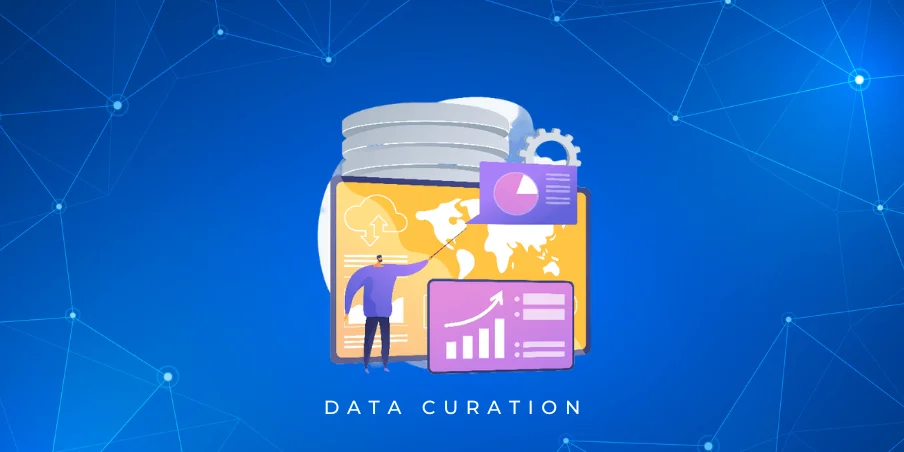
In an age of data-driven decision-making, ensuring the accuracy of this data is paramount. This is especially true for address data, which is essential for many business functions from logistics & distribution to customer relationship management to improve address-match rate accuracy, thus increased data curation is needed for processes to simplify & increase overall efficiency.
Understanding Data Curation
Data security involves the strict management, organization & maintenance of data to ensure its quality, integrity & availability. These activities include data cleaning, standardization, validation, & continuous updating. Effective data protection ensures that information remains reliable & useful over time.
The Importance of Accuracy
Accurate address information is key for businesses for several reasons:
i]. Operational Efficiencies:
Accurate address information reduces the risk of delivery errors & improves route planning.
ii]. Customer Satisfaction:
Ensures timely & adequate delivery, improving customer experience.
iii]. Reduces Costs:
Reduces costs associated with indirect delivery, such as returns & reshipments.
iv]. Business Improvement:
Improves the success of marketing campaigns by ensuring that promotions reach the intended customers.
v]. Regulatory Compliance:
Helps businesses comply with laws & regulatory standards by keeping accurate records.
Fundamentals of Data Curation
There are several key steps to improving data curation that, taken together, improve the accuracy of the address match rate:
i]. Data Cleansing
Data correction is the process of identifying & correcting inaccuracies & inconsistencies in data. For address data, this may include correcting typos, standardizing formats, & eliminating duplicates. Pure data is the basis for perfect address matching.
ii]. Data Standardization
Standardization ensures that all address entries follow a consistent pattern. This includes standard abbreviations, formal terminology, & a consistent layout of address segments. Custom data can be easily matched & combined with other data types.
iii]. Data Processing
Data validation includes verifying the accuracy & completeness of the address data. This step verifies that the addresses are correct & formatted according to postal standards. Verification tools & postal databases are often used to verify this.
iv]. Address Development
Address enrichment adds additional information to address data, making it more comprehensive. This can include adding missing items such as postal codes, street names, or building numbers. Fine data makes address information more accurate & complete.
v]. Continuous Maintenance
Ongoing maintenance is essential to keep address information accurate & up-to-date. This includes regularly updating data, removing outdated information, & revalidating addresses. Ongoing maintenance ensures that address data remains reliable over time.
Advantages Of Advanced Address Mail Costs
Increasing data security to improve address match rates offers several important benefits:
i]. Reduced Operating Costs
Accurate address information reduces costs such as delivery errors, returns & customer service efforts. High shipping rates ensure that shipments succeed on the first attempt, saving time & resources.
ii]. Increased Customer Satisfaction
Customers expect their orders to arrive at the right place on time. Accurate address information ensures timely delivery, leading to increased customer satisfaction & loyalty. Satisfied customers are more likely to return & recommend the business to others.
iii]. Increased Production Efficiency
With accurate address data, companies can improve their logistics & delivery efficiency. Efficient routing & delivery reduces delays & improves overall operational efficiency.
iv]. Better Marketing Results
Accurate address data for marketing campaigns ensures that promotions reach their intended audience, providing a high return on investment (ROI). This reduces waste & increases responsiveness.
v]. Compliance & Risk Management
Accurate address information helps businesses comply with regulatory requirements & reduces the risk of fraud. Properly secured address information ensures that businesses can verify customer identity & comply with legal standards.
Challenges in Data Curation
Despite the obvious benefits, companies face several challenges in improving data security:
i]. Quantity Of Data
The sheer volume of address data can be overwhelming, especially for large organizations. Managing and maintaining extensive datasets requires complex systems & resources.
ii]. Verify Data Quality
Maintaining high data quality is an ongoing challenge. Incorrect or incomplete data can cause problems with address matching and other business functions.
iii]. Data Integration
Integrating address data from different sources can be difficult. Policies and standards must be woven to create a cohesive and accurate dataset.
iv]. Resources
Data protection requires significant resources including time, money & skilled personnel. Companies need to properly allocate these resources to maintain high data quality.
Best Practices for Enhancing Data Curation
To address these challenges & enhance data protection, companies can adopt several best practices:
i]. Use Tools
Automated communication tools can help manage large amounts of data more efficiently. These tools can clean, standardize, validate, and improve address data, reducing manual effort & error.
ii]. Implemented Data Governance
A robust data governance framework ensures that data governance practices are consistent and adhered to throughout the organization. This includes defining data quality standards, roles, & responsibilities.
iii]. Do Regular Audits
Regular data analysis helps identify and resolve problems with the address database. Audits ensure that data remains accurate, complete & up-to-date.
iv]. Invest In Training
Training employees on data curation best practices and tools ensures the team has the necessary skills to maintain high-quality data. Ongoing learning exposes the team to the latest trends & technologies.
v]. Collaborate With Experts
Collaborating with data quality experts and vendors can provide insights & innovations to improve the address data security. Experts can provide customized solutions & best practices to improve data accuracy.
Future Trends in Data Curation
The data security industry is constantly evolving, with new technologies & techniques emerging to improve the accuracy of address data. Here are some future trends:
i]. Artificial intelligence (AI) & Machine Learning
Artificial intelligence and machine learning can enhance data security by identifying patterns & anomalies in address data. These technologies can be used to clean up, validate, and augment data, improving accuracy & performance.
ii]. Blockchain Technology
Blockchain provides a secure and transparent way to process address data. It can ensure data integrity and traceability, making it easier to verify & maintain accurate address information.
iii]. Advanced Methods Of Data Integration
New data integration techniques allow businesses to seamlessly integrate address data from different sources. This provides more comprehensive & accurate data sets for better code matching.
iv]. Real-Time Data Updates
Real-time data processing ensures that address data is always current & accurate. The addition of real-time data feeds to address databases helps maintain higher session rates & reduces the risk of outdated information.
Conclusion
Increasing data security is necessary to improve the address-matching rate. By implementing effective data cleansing, standardization, validation, and enrichment practices, businesses can ensure the integrity and reliability of their address data. Improved address-matching rate benefits include reduced operating costs, increased customer satisfaction, increased efficiency, better marketing results, and compliance with regulatory requirements. Despite the challenges, adopting best practices and technology in the upcoming implementation can significantly enhance the security of address data, leading to better performance results.
Investing in a robust data communications infrastructure is not just a necessity but a fundamental aspect of doing business in today’s data-driven world. Businesses that prioritize quality data will not only increase their operational efficiency but also build stronger relationships with their customers, leading to long-term success.